
.svg)
Latest Insights
Stay ahead with actionable insights and fresh ideas from our team. We share practical guides, design inspiration, development tips, and industry trends to help you create high-performing websites, improve user experience, and grow your online presence with confidence.

Build vs Buy: The Real LMS Cost Math (2026)

.svg)
Direct answer
Buying wins by default. A SaaS or WordPress LMS like LearnDash gets a training company live in weeks for a fraction of a custom build's upfront cost. Building only pays off when your training data has to plug directly into systems a vendor's export was never built to match, and even then, the math takes years to break even.
Most of what ranks for "build vs buy LMS" right now comes from one of two self-interested sources: a custom-development agency selling builds, or an LMS vendor selling subscriptions. Both publish real cost figures, and the figures contradict each other by a factor of five or more. One agency's build-cost guide lands at $30,000 to $200,000+. Another's lands at $70,000 to $400,000 for the same kind of project. Neither discloses how it reached those numbers. That's the actual state of this topic online: everyone citing a specific dollar figure has a reason to want you to land on one side of it. This guide shows the math instead of the conclusion, so you can run your own numbers rather than borrow someone else's.
Is It Cheaper to Build or Buy an LMS?
In year one, buying is cheaper almost every time. A SaaS plan or a WordPress LMS has you paying for usage from day one, with no capital outlay before a single learner logs in. A custom build asks you to pay most of the project cost upfront, often before you've validated that the workflow you're building even needs to be custom.
Over a longer horizon, the answer depends on two numbers that are specific to your business: how many active users you'll have in three to five years, and what a vendor charges per user at that volume. Per-user SaaS pricing is cheap at low headcounts and expensive at high ones, because the fee is built to scale with you. A custom build's hosting and maintenance cost barely moves whether you have 50 users or 5,000. That crossover point is the real build-vs-buy question, and it's answerable with arithmetic, not a vendor's sales deck.
Even an LMS vendor's own research doesn't pretend this is simple. Docebo's internal guide on the question puts it plainly: an in-house build has to be weighed against years of a dedicated vendor's engineering, not just against the sticker price of a developer's time. A documented case from a university engineering program shows the other side of it: a team chose to build because it already had the technical infrastructure and staff on hand to carry it, which is a narrower condition than "we didn't want to pay a subscription."
What Does a Custom LMS Actually Cost to Build?
Published estimates disagree by design, because "custom LMS" describes projects that range from a branded course catalog to a system that reconciles licensing data with a state regulator's reporting format. One widely cited agency estimate puts a custom build at $30,000 to $200,000-plus, with a four-to-twelve-month timeline depending on scope. A separate agency's range runs higher still, $70,000 to $400,000, for what it describes as comparable projects. Treat both as directional, not as a quote for your project.
What actually drives the number is narrower than either range suggests: how many integrations the LMS needs (a CRM, an agency management system, a credentialing database), how much of the reporting format is dictated by someone outside your company, and whether the content itself needs a custom player or just needs to display SCORM packages someone else built. A build that's mostly "take our existing workflow and give it a login screen" prices far below a build that has to reconcile licensing records with a state regulator's exact reporting format. Get a scoped quote against your actual requirements before treating any public range as your budget.
What Does an LMS Subscription Actually Cost Over Time?
Per-seat and per-active-user pricing is the dominant model across corporate and partner-training LMS platforms. The listed monthly fee is only ever a starting point. The number that matters is that fee multiplied by your active user count, and that multiplication is where a subscription either stays cheap or stops being the obvious choice.
Here's a modeled scenario, not a real client's invoice, to show how that works. A training provider with 400 active learners on a mid-market per-user LMS plan at $7 per user per month pays $2,800 a month, or $33,600 a year. If that same provider grows to 800 active learners on the same plan, the fee doesn't change, the headcount does: the bill becomes $67,200 a year, double, for the same feature set. That's not a platform "taxing your growth." It's a per-seat plan charging exactly what it says it charges, at a higher seat count. Whether that math still works for you depends entirely on how fast your user count is actually growing, which is a question only you can answer, not a vendor's pricing page.
When Does Building a Custom LMS Actually Pay Off?

Rarely in year one, and the trigger isn't cost. It's a workflow a vendor's export was never built to match. Developios built Agency Elite for an insurance agency that needed producer onboarding and continuing-education tracking tied directly to licensing data, reconciled against a specific state filing format no generic course platform was going to produce. The same pattern shaped GED Masters, a custom learning management system built around a credentialing workflow specific enough that adapting an off-the-shelf platform would have meant fighting its assumptions at every step.
Using the modeled numbers above: that same 400-user training provider paying $33,600 a year for a SaaS plan, compared against a custom build quoted at $90,000 upfront plus $900 a month in hosting and maintenance ($10,800 a year), doesn't break even on subscription cost alone until roughly year four. Below that line, buying wins on cost even before you factor in the workflow question. Above it, and especially once a vendor's export genuinely can't produce the report or integration your business needs, the case for owning the system stops being about the invoice and starts being about whether the business can run at all without it.
Can an Established Platform Like LearnDash Beat a Custom Build?
Often, yes, and this is the option most "build vs buy" content skips because neither a SaaS vendor nor a custom-dev agency has a reason to recommend it. LearnDash and similar WordPress-based LMS plugins give you years of plugin maturity, an existing integration ecosystem, and a one-time or annual license instead of a six-figure build quote. For a training business whose needs are standard, courses, quizzes, certificates, drip content, bulk enrollment, that maturity is worth more than anything a from-scratch build would add in year one.
Where it stops being enough is the same place every SaaS option stops being enough: a workflow the plugin ecosystem doesn't have a module for, and no developer available to extend it to your exact specification without essentially rebuilding core pieces of it anyway. At that point you're not comparing WordPress against custom. You're comparing a half-custom patch job against a system built for the actual requirement, which is a different, harder comparison than most "alternatives" roundups let on.
How Do You Model the Build vs Buy Decision Honestly?
Four numbers, and none of them are the ones most comparison articles lead with. First, your active user count today and your realistic estimate three years out, since that's what per-seat pricing actually multiplies against. Second, a real scoped quote for the custom build, not a published range, because the range hides whether your project is the cheap end or the expensive end of it. Third, the specific workflow or integration, if any, that no off-the-shelf export currently produces. Fourth, what it actually costs you, in rework or risk, to not have that workflow solved today.
If that fourth number is small, the subscription is not a ripoff. It's correctly priced for what it does, and the honest move is to keep paying it. If that fourth number is large, because a compliance report has to be rebuilt by hand every quarter, or a licensing integration doesn't exist and won't, the case for building was never really about the monthly fee. It was about the one thing the fee was never going to buy you. We've written about how to present exactly this kind of decision-ready comparison so AI tools surface it accurately too, in how to get cited by ChatGPT and Perplexity.
FAQ
Is it cheaper to build or buy an LMS in year one?
Buying, almost always. A SaaS plan or WordPress LMS has you paying for usage from day one with little or no capital outlay. A custom build asks for most of its cost upfront, often tens of thousands of dollars before a single learner has logged in, which makes year one the hardest year to justify building on cost alone.
How long does it take to build a custom LMS?
Published estimates range from about four months for a narrowly scoped build to twelve months or more for one with multiple integrations and custom reporting. The timeline depends far more on how many outside systems the LMS has to talk to than on the course-delivery features themselves, which are the easy part of most builds.
What's the biggest cost that most build-vs-buy comparisons leave out?
Migration and rework if you switch later. Course content generally exports cleanly from one platform to another. The relationships and workflows built around it, enrollment automations, reporting integrations, admin structures, don't carry over automatically and have to be rebuilt, regardless of which direction you're switching.
Should a training company ever start with a custom build before trying SaaS?
Rarely. Validating that a training program works, that learners complete it and that the content is right, is usually faster and cheaper on a SaaS plan or an established platform like LearnDash. Building first, before you know which workflows are actually non-standard for your business, risks spending the budget on assumptions a few months on the ground would have corrected for free.
Can you move from a SaaS LMS to a custom one later without starting over?
Mostly, for content. Course materials, videos, and completion records generally export. What doesn't move automatically is the operational layer built around the old platform, integrations, automations, and admin workflows, which has to be rebuilt on the new system regardless of how clean the content export is.
Does per-user LMS pricing ever stop making sense for a growing training company?
It can, once your active user count grows enough that the per-seat total exceeds what a custom build's fixed hosting and maintenance cost would have run over the same years. That crossover point is specific to your actual user growth and your vendor's actual rate. It isn't a fixed number, and it isn't evidence that the pricing itself is unfair.
Kajabi and Teachable Alternatives for Training Teams (2026)
Direct answer
Kajabi and Teachable are built to sell courses to individual buyers, not to run training for an organization. Kajabi's own documentation confirms it doesn't support SCORM. If your business needs SCORM reporting, compliance tracking, or multi-tenant admin, look at TalentLMS, LearnWorlds, Thinkific Plus, or a custom-built platform instead.
Searches for "Kajabi alternatives" and "Teachable alternatives" mostly come from the same place: a creator or coach comparing course-seller platforms on price and polish. Almost everything ranking for those terms right now is written for that person, and it's a fair question for that person to ask. But a chunk of that search traffic comes from somewhere else: a training business that has grown past selling courses to individuals and now needs to run structured training for employees, partners, or licensees. Nobody ranking for this keyword is writing for that second group. This guide is.
Why do training businesses outgrow Kajabi and Teachable?
Both platforms are genuinely good at what they're built for: taking a course from idea to paying customers fast, with checkout, email marketing, and a student dashboard handled for you. That's the right starting point for almost anyone with a course to sell, including most training businesses in their first year or two.
The friction shows up when training stops being something you sell to the public and starts being something you have to prove happened. A compliance team needs a completion record in a specific audit format. An HR department needs training data tied to an employee ID, not a customer email. A partner network needs separate cohorts with separate admins who can't see each other's data. None of that is a pricing problem. It's a structural mismatch between a platform built for creators selling to strangers and a business running training for people inside defined organizations.
Is Kajabi or Teachable SCORM compliant?

Kajabi is not. Kajabi's help center says plainly that the platform doesn't support SCORM or HTML5 course packages, and its course builder is built around native lessons, media, and downloads instead. That's not a guess or a competitor's dig. It's Kajabi's own documentation.
Teachable's public help pages don't make an equivalent statement either way, and we weren't able to confirm its current SCORM policy from Teachable's own documentation. If SCORM packages from a tool like Articulate or Rise are central to how you build training, confirm directly with Teachable's support team before you commit, rather than assuming either answer.
SCORM itself is a packaging and communication standard, maintained by SCORM.com, that lets a course package report completion and quiz scores to any LMS that supports it. If you never need that content to talk to a separate reporting system, SCORM support is irrelevant to you. If a client, regulator, or HR system expects it, it's a hard requirement, not a nice-to-have.
What's the real difference between a course-selling platform and an LMS?
A course-selling platform is built to turn strangers into paying students. Its best features are the ones that help with that job: checkout flows, landing pages, email sequences, affiliate tracking, and a clean student experience. Kajabi and Teachable are both strong here.
An LMS is built to manage training for people who already belong to something: a company, an agency, a licensing body. Its best features look different: SCORM and xAPI support, role-based admin so a manager only sees their own team, bulk enrollment, and exportable completion data that holds up if someone asks for proof later.
Some platforms sit in between and market themselves that way, including Thinkific Plus and LearnWorlds. If you're evaluating either one, don't take the marketing page at face value. Ask for the specific SCORM version supported, how admin roles are scoped, and what a completion export actually looks like, because those three answers tell you more than any feature list.
Which Kajabi or Teachable alternative actually fits a training business?
It depends on who the training is for.
If you're still selling courses to individual customers and just want more flexibility than Kajabi or Teachable give you, Thinkific Plus or LearnWorlds are the natural next step up. They keep the course-seller model but add more admin structure as you grow.
If you've shifted to training people inside organizations, like employees, franchisees, or licensed producers, TalentLMS and similar corporate-oriented tools are built for exactly that. SCORM support and role-based reporting come standard, and you're not fighting the platform's assumptions about who your learners are.
If your training data needs to connect to something else you run, like a commission system, a licensing database, or a credentialing workflow, no off-the-shelf platform, creator-focused or corporate, is going to match your exact requirements out of the box. That's the point where building starts to make sense, and it's a narrower case than most "alternatives" lists want you to believe.
When does switching off Kajabi or Teachable become worth the cost?
Migration has a real cost: re-uploading content, rebuilding automations, and re-establishing the student or employee relationships that lived inside the old platform. Content exports. Relationships don't automatically carry over, and that work is often bigger than the platform switch itself.
That cost is worth paying when the old platform is actively blocking something your business needs now, not something you might need eventually. A missing SCORM import, a compliance report you have to rebuild by hand every quarter, or an admin structure that can't separate two client accounts are real, current costs. Those are worth fixing. "This platform might get expensive if we grow a lot" is a reason to model the numbers, not a reason to migrate today.
Should a growing training business build its own platform instead?
Usually not yet. If you're validating your first training program or you're a small team without a dedicated compliance or integration requirement, stay on a SaaS platform. An established option like LearnDash on WordPress can outperform a custom build outright for a lot of training businesses, since you get years of plugin maturity without paying to rebuild it.
Building earns its cost when the workflow itself doesn't exist off the shelf. Developios built Agency Elite, a training platform for an insurance agency that needed producer onboarding and CE tracking tied directly to licensing data no course-seller platform was going to touch. The same pattern shaped GED Masters, a custom learning management system built around a specific credentialing workflow rather than a generic course catalog.
Here's a model, not a real client's invoice, to show the shape of the math: a training business paying $99/month for a mid-tier course-seller plan spends roughly $1,200 a year on subscription fees alone. A custom build quoted at $30,000 up front plus $400/month in hosting and maintenance runs about $4,800 a year ongoing. Under these assumptions, ownership doesn't break even against the subscription on fee cost alone for several years. The case for building isn't that the subscription is a ripoff. It's that the subscription can't do the one specific thing your business actually needs it to do, and that gap costs you more than the monthly fee ever will.
The same logic applies to how you present this kind of decision-ready content to buyers and to AI tools that answer their questions. We cover the mechanics of that in how to get cited by ChatGPT and Perplexity.
FAQ
Is Kajabi good enough for a training business?
For selling courses to individual customers, yes. For running training that has to report to HR, a compliance team, or a regulator, no, not on its own. Kajabi's own help center confirms it doesn't support SCORM, which rules it out wherever a SCORM import or export is a hard requirement rather than a preference.
What's the best Teachable alternative for a growing training business?
It depends on who you're training. TalentLMS and similar corporate-oriented platforms fit internal or partner training with built-in reporting. Thinkific Plus or LearnWorlds fit a business still selling courses publicly but outgrowing a single-creator plan. Confirm SCORM and admin-role specifics directly with any vendor before committing.
Does Teachable support SCORM?
We couldn't confirm this from Teachable's own public help documentation, and third-party claims about it vary and go stale quickly. If SCORM packages matter to how you build training, ask Teachable's support team directly rather than relying on a comparison article.
How do I migrate off Kajabi or Teachable without losing my content?
Most course content, videos, written lessons, and downloads, exports cleanly from either platform. What doesn't carry over automatically is the relationship data: email automations, affiliate structures, and student engagement history. Budget real time to rebuild those pieces rather than assuming a straight export covers everything.
Is TalentLMS better than Kajabi for employee training?
For training people who already work for or with your company, yes, generally. TalentLMS is built around SCORM, role-based reporting, and internal learner management, which is what employee and partner training actually needs. Kajabi is built to sell courses to the public, which is a different job.
When should a training business build a custom LMS instead of buying one?
When training data has to connect to something else you run, like licensing records, commission data, or a credentialing workflow no off-the-shelf export matches. Under about that threshold, a SaaS platform will almost always cost less and ship faster than a custom build.

LMS for Insurance Agencies: A 2026 Buyer's Guide
Direct answer
An LMS built for insurance agencies needs three things most generic training tools skip: CE credit tracking tied to state filing deadlines, carrier-specific product certification paths, and reporting that holds up if a regulator asks for it. Off-the-shelf insurance LMS platforms cover this for most agencies. Custom only earns its cost once training data has to talk to your agency management system or commission engine.
We build custom training platforms for this industry, including Agency Elite for a State Farm agency, so the recommendations below come from shipping one, not from reading about it. Most of them point away from building.
Independent agencies, MGAs and insurance carriers all search for "LMS for insurance agencies" for the same reason: they've outgrown a shared drive full of PDFs and a spreadsheet that tracks who's licensed in which state. The problem is that almost everything ranking for that phrase right now is a vendor's own feature page, written to sell their tool, not to help you figure out what you actually need first. This guide fills that gap.
What makes insurance agency training different from everyone else's?

Three things, and they're the reason a generic corporate LMS often falls short without customization.
First, continuing education isn't optional. Every state sets its own CE requirements and renewal cycle for licensed producers and adjusters, and NAIC's model regulation on CE reporting pushes states toward electronic roster filing with set deadlines after course completion. Most states now accept that filing through NIPR, though a few, including Florida and Texas, run their own systems. Get a producer's NPN wrong on a filing and the credit can fail to post even though the training happened.
Second, your producers need to know your carriers' products, not generic sales skills. An agency appointed with 20+ carriers across home, auto, commercial and life needs a different certification path per carrier, and those paths change every time a carrier updates a product or a state changes a disclosure requirement.
Third, the industry loses people fast. Roughly 89% of insurance agents who quit do so within three years, and close to a third of new producers leave within their first three months, according to data cited by Insurance Thought Leadership. When ramp-up takes 18 months and turnover is this high, how fast your training gets a new hire productive is a real cost line, not a nice-to-have.
Do you actually need a dedicated insurance LMS, or will a generic one work?
For a lot of agencies, a generic LMS is genuinely fine. If you're a 10-person agency with one state license to worry about and a handful of carrier appointments, a tool like TalentLMS will run your onboarding and product training without complaint, and you shouldn't build anything custom to replace a $1,400-a-year subscription.
The gap shows up around compliance reporting. TalentLMS's own pricing page lists tiers from a free plan for five users up to a Pro plan around $449/month for 1,000 active users, with SCORM support and custom reporting included — but CE credit filing to state regulators isn't a feature it advertises, because that isn't what the platform is built for. The same is true of most general-purpose tools in this category. Before you buy, ask the vendor directly whether CE roster filing, NPN validation, and per-state renewal alerts are actually supported, rather than assuming either way.
Docebo sits at the other end of the generic category: enterprise-grade, priced on yearly active users rather than seats, and typically quoted rather than published, with reported starting costs in the tens of thousands per year. That's a lot of platform for a mid-size agency that mostly needs onboarding and CE tracking, not a full corporate learning suite.
Is an LMS the same thing as an agency management system?
No, and this mix-up causes real confusion when agencies start shopping. An agency management system (AMS) runs your actual business: policies, carrier downloads, commissions, client records. An LMS runs training: courses, certifications, quiz scores, completion records. Some AMS vendors bundle lightweight training modules, and some LMS vendors market insurance-specific templates, but the two tools solve different problems.
The friction starts when you want them to talk to each other. You want a new producer's CE completions to show up next to their book of business. You want carrier certification status to gate which products show up in their quoting tool. Off-the-shelf LMS and AMS platforms generally don't integrate with each other out of the box, so if that connection matters to how your agency actually runs, it becomes one of the main arguments for building rather than buying.
How much does an LMS for an insurance agency actually cost?
It depends almost entirely on how many users you have and whether you need compliance features baked in. On the generic side, published self-serve pricing clusters in a predictable range: TalentLMS runs roughly $119 to $449 per month depending on user count and features, before any custom integration work. Docebo's publicly quoted tiers run far higher and are built for organizations already spending real budget on learning technology.
Insurance-specific platforms rarely publish pricing at all, which is typical for B2B SaaS sold through a sales team rather than a self-serve signup. Expect a quote-based conversation, and expect the price to move with how many of your producers and CSRs need licensed access versus how many just need product training.
None of this includes implementation: loading your existing course content, mapping your states' CE rules, and training your team on a new system. Budget real time for that step regardless of which platform you choose.
When does it make sense to build instead of buy?

Rarely, and that's the honest answer. Most of what a SaaS LMS charges you for is infrastructure, support, and continuous feature development you'd otherwise have to pay to maintain yourself. If your agency is validating a new training program, or you're under 50 people, start on a SaaS platform. An agency that size shouldn't be funding a custom build to save a few thousand dollars a year in subscription fees.
The case for building shows up when the workflow itself doesn't exist off the shelf: training data that needs to live inside your custom learning management system alongside your AMS and commission data, carrier certification paths that gate access to quoting tools automatically, or audit reporting that has to match your compliance team's exact format rather than a vendor's generic export.
Here's a model, not a real agency's invoice, to show the shape of the math: an 80-person agency paying $229/month for a mid-tier generic LMS spends roughly $2,750 a year on license fees alone. A custom build quoted at $35,000 up front plus $500/month in hosting and maintenance runs about $6,000 a year ongoing. Under these assumptions, the custom option doesn't catch up to the SaaS subscription on license cost alone for over a decade. The case for building isn't that it's cheaper. It's that the SaaS plan can't do the one or two things your agency actually needs it to do.
What does a custom-built option look like in practice?
We build these. Agency Elite is a training and operations platform Developios designed and built for a State Farm insurance agency, and it's the clearest example of what the "one place instead of four" argument actually looks like once it ships.
The scope tells you where the work goes. 45+ screens, built as a modular design system with reusable components rather than a set of one-off pages, because an agency platform grows and a pile of bespoke screens doesn't survive that. Multiple user roles with genuinely different permissions, from producer up to super admin. Performance and revenue reporting sitting in the same workspace as everything else, so a leader checking agency health isn't exporting to a spreadsheet to get there. Fully responsive and mobile-first, which matters more in this industry than most, because producers are not at a desk.
That last point is the pattern worth copying whether you build with us or not: the hard part of an agency platform is almost never the course player. It's the administration, the role hierarchy, and the reporting around it. Price and plan any build on that basis.
We took the same structural approach on GED Masters, a learning platform built around a specific credentialing workflow rather than a generic course catalog: model the data around the rules that govern it first, then build the interface on top of that structure.
That's the real argument for a build: not that SaaS is a ripoff, but that once your training data has to drive decisions elsewhere in your business, owning the system that holds it stops being a luxury.
FAQ
What's the difference between an LMS and an agency management system (AMS) for insurance agencies?
An AMS runs the business: policies, carrier downloads, commissions and client records. An LMS runs training: courses, quizzes, certifications and completion records. Some vendors blur the line with bundled features, but they're built to solve different problems, and most don't integrate deeply with each other without custom work.
Can a standard LMS like TalentLMS handle state CE credit reporting?
Not as a documented, built-in feature on most generic platforms. They handle SCORM content, quizzes and completion tracking well, but roster filing to state regulators and NPN validation are specialized compliance workflows. Confirm directly with the vendor before assuming a generic tool covers this, rather than assuming either way.
How much does an insurance agency LMS cost?
Generic platforms publish tiers roughly in the $1,400–$5,400 per year range for small-to-mid agencies, based on published self-serve pricing. Insurance-specific and enterprise platforms are typically quote-based. A custom build runs a one-time project cost plus ongoing hosting, and only pays off against subscription costs over several years.
Why do new insurance producers take so long to become productive?
Industry data cited by Insurance Thought Leadership puts average ramp time at around 18 months to full productivity, with close to half of new producers never reaching full validation. Structured onboarding with clear milestones measurably shortens that curve, which is the main argument for investing in training infrastructure rather than ad hoc materials.
Is TalentLMS or Docebo good enough for a growing insurance agency?
For straightforward onboarding and product training without heavy compliance requirements, yes, either can work well and both publish SCORM and reporting support. Neither advertises insurance-specific CE filing or NPN validation as a core feature, so if that's a requirement, verify it directly with their sales team before signing a contract.
Should a small independent agency build a custom LMS?
Usually not. If you're under roughly 50 staff with a handful of carrier appointments, a generic or insurance-focused SaaS platform will almost always cost less and ship faster than a custom build. Building makes sense once your training data needs to connect directly to your AMS, commission engine, or a compliance reporting format no off-the-shelf export matches.
Is Headless Shopify Worth It? Costs, Speed and the Real Answer (2026)
TL;DR: Headless Shopify means running a custom frontend (often Next.js) on top of Shopify's backend via the Storefront API, instead of a Liquid theme. It buys you speed and design freedom, but it costs $80k to $150k+ to build and adds $500 to $2,000/month in tooling. It is worth it mainly above roughly $10M in revenue. For most stores under that, a well-tuned Liquid theme captures most of the gain at a fraction of the cost.
Headless is the most over-recommended architecture in eCommerce. It is genuinely powerful, and for the wrong store it is an expensive way to make life harder. The honest answer to "should we go headless?" is almost always "it depends on your revenue and your goals," so let us make that concrete.
What is headless Shopify?
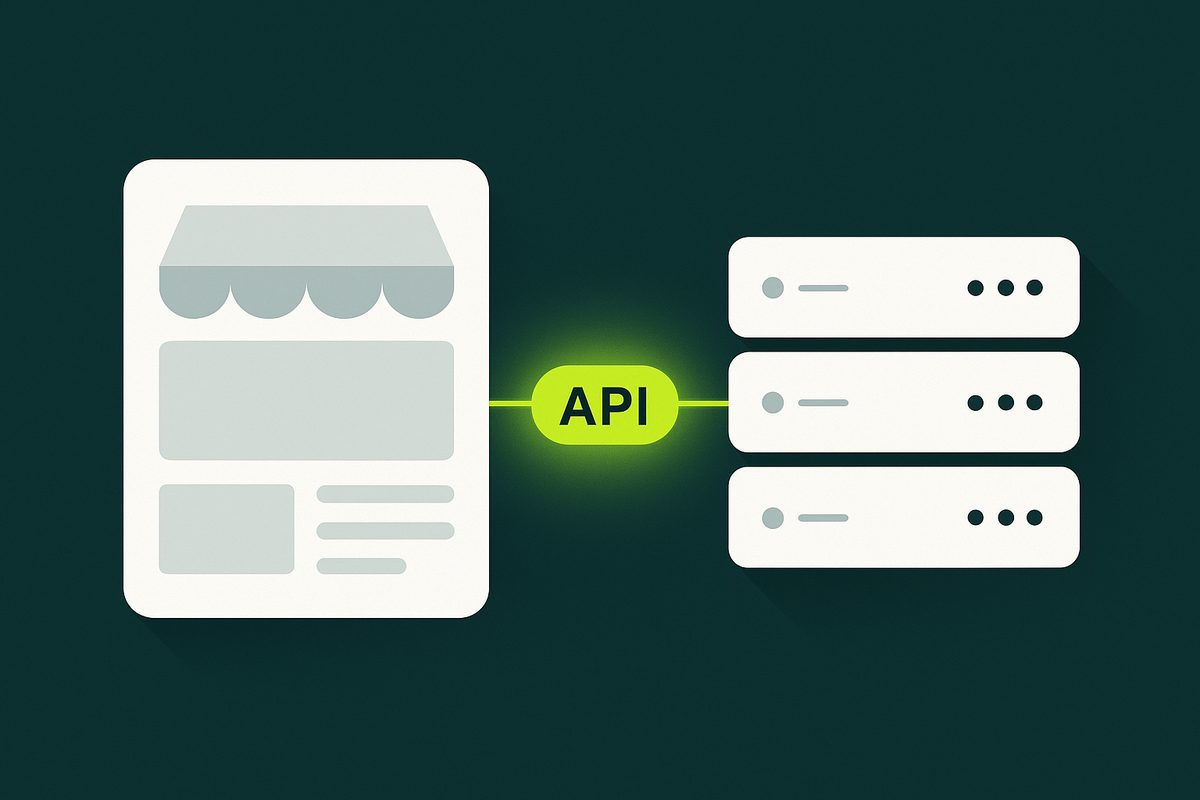
Headless Shopify decouples the storefront (what shoppers see) from Shopify's commerce backend (catalog, cart, checkout, orders). Instead of a Liquid theme rendering pages, you build a custom frontend, usually in a framework like Next.js, that pulls data through Shopify's Storefront API. Checkout still runs on Shopify.
The appeal is control. You get a fast, app-like frontend, total design freedom, and the ability to pull content from any source. The cost is complexity: you are now maintaining a custom application, not configuring a theme.
How much does headless Shopify cost?
This is where the decision usually gets made. The numbers are not small.
- Build: a headless Shopify Plus build typically runs $80,000 to $150,000+, versus $30,000 to $60,000 for a well-built Liquid theme. (Weaverse 2026 pricing breakdown)
- Ongoing tooling: headless adds $500 to $2,000/month for a headless CMS (Sanity, Contentful), hosting (Vercel, Oxygen), and search (Algolia), on top of your Shopify Plus fee.
- Maintenance: a custom frontend needs ongoing developer support. That is a real line item, not a one-time cost.
So the question is not just "is headless faster?" It is "will the extra speed and flexibility earn back six figures plus monthly tooling?"
Is headless Shopify worth it?
Performance is the main argument for headless, and the gains are real but more modest than the marketing suggests. A well-built headless frontend routinely hits a Largest Contentful Paint under 1.2 seconds, against a median of around 3.1 seconds for standard themes. In practice that is a 0.4 to 1.2 second improvement and a 3 to 8% conversion lift over a tuned Liquid theme. Google and Deloitte found a 0.1-second load improvement alone lifted conversions by 8.4%, so speed clearly pays.
The ceiling can be much higher with the right brand. Sennheiser reported a 136.7% increase in conversion rate and 74.8% more add-to-carts after going headless. Not every brand sees a 2x lift, but the pattern of better speed and UX repeats across well-executed enterprise migrations.
The threshold that matters: headless usually makes financial sense above roughly $10M in annual revenue. For mid-market brands in the $5M to $20M range with a well-executed build, payback typically lands in 12 to 18 months. Below $5M, the same budget spent on CRO and acquisition usually returns 3 to 5x more.
When should you NOT go headless?
For roughly 80% of brands under $10M a year, the answer is: not yet. Optimize the Liquid theme first. Well-tuned Liquid themes have gone from 3.4-second LCP down to 1.7 seconds, which captures most of the speed gain headless promises at around 5% of the cost.
Skip headless for now if any of these are true:
- You are under about $10M in revenue and your theme has not been performance-tuned yet.
- You do not have ongoing developer support budgeted.
- Your real problem is conversion, not speed. In that case, start with Shopify conversion rate optimization, which usually returns far more per dollar.
- You rely heavily on Shopify apps that would need custom rebuilding on a headless frontend.
When headless genuinely makes sense
Headless earns its cost when you have the revenue to absorb it and a specific reason to need it:
- You are above $10M and a 3 to 8% conversion lift is worth six figures.
- You need a content-heavy experience that a theme cannot handle cleanly (editorial, complex merchandising, multi-brand).
- You are expanding internationally and want one frontend serving many markets.
- Speed and Core Web Vitals are materially holding back both conversion and AI-search visibility, since fast, structured pages are also what gets cited in AI search.
How Developios approaches the headless decision
We build both, so we have no incentive to push you toward the expensive option. Across 150+ projects delivered at 98% client satisfaction, our default advice for stores under $10M is to tune the Liquid theme and fix the funnel first, because that is where the return is. We recommend headless when the revenue, the roadmap, and the performance ceiling actually justify it.
When headless is the right call, we build it properly: a fast Next.js frontend, clean Storefront API integration, a headless CMS your team can actually use, and structured data so the store performs in both conversion and AI search. When it is not the right call, we will tell you, and point the budget where it returns more.
Not sure which side of the line your store is on? A free Website Audit will tell you whether headless would pay off or whether a tuned theme gets you most of the way for far less.
Frequently asked questions
Is headless Shopify worth it?
For most brands under $10M in revenue, no, not yet. The build costs $80k to $150k+ plus $500 to $2,000/month in tooling, and a well-tuned Liquid theme captures most of the speed gain for a fraction of that. Above $10M, where a 3 to 8% conversion lift is worth six figures, headless often pays back in 12 to 18 months.
How much does headless Shopify cost?
A headless Shopify Plus build typically runs $80,000 to $150,000+, versus $30,000 to $60,000 for a strong Liquid theme. On top of that, expect $500 to $2,000/month for a headless CMS, hosting, and search, plus ongoing developer maintenance.
Is headless Shopify faster than a Liquid theme?
Yes, but the gap is smaller than often claimed. Headless frontends commonly hit sub-1.2-second LCP versus a ~3.1-second median for standard themes, a 0.4 to 1.2 second gain and a 3 to 8% conversion lift. A properly tuned Liquid theme can reach 1.7 seconds, capturing most of that improvement at far lower cost.
What is the difference between headless and Shopify Liquid?
Liquid is Shopify's built-in templating language; the theme renders pages directly from the platform. Headless replaces that frontend with a custom application (often Next.js) that pulls data via the Storefront API, while checkout stays on Shopify. Headless gives more control and speed but adds significant cost and maintenance.
What revenue do you need before headless makes sense?
Roughly $10M in annual revenue is the common threshold. Mid-market brands ($5M to $20M) with a well-executed build typically see payback in 12 to 18 months. Below $5M, the same money spent on CRO and acquisition usually returns 3 to 5x more.
Does headless Shopify help with SEO and AI search?
It can, because speed and clean, structured markup help both Google and AI engines. But a well-built Liquid theme can achieve the same SEO and AI-search fundamentals. Headless is not required for strong AI-search visibility; structure and speed are, and you can get those either way.
Thinking about going headless? Get a free Website Audit from Developios and we will give you a straight answer on whether it would pay off for your store, or whether a tuned theme gets you there for less.
Shopify B2B Explained: Wholesale Features, Pricing and Setup 2026
TL;DR: Shopify B2B is a native suite of wholesale features: company profiles, custom catalogs, volume pricing, and payment terms. Built into Shopify so you can sell to business buyers from the same store you use for retail. Basic tools are available on all plans. The full feature set (unlimited catalogs, dedicated B2B storefront, checkout extensibility) requires Shopify Plus. Merchants using Shopify B2B see up to 4.1x higher reorder frequency than DTC channels.
Wholesale used to mean a second platform, a messy spreadsheet, or a Frankenstein of discount codes and customer tags. Shopify changed that. Over the last few years the platform built a genuine B2B layer: one that lets you manage wholesale buyers, custom pricing, and trade payment terms from the same admin you use for your direct-to-consumer store.
This guide covers what Shopify B2B actually includes, what it costs, which plan you need, when third-party wholesale apps make more sense, and what a well-built B2B setup looks like in practice.
Is Shopify B2B or B2C?
Shopify is both. It was built as a B2C platform, but it now has a fully developed B2B capability that runs alongside your retail channel, or independently on a separate storefront if you prefer a clean split.
The distinction matters because B2B and B2C buying are genuinely different experiences. A retail customer picks a product, enters a card number, and checks out in minutes. A B2B buyer comes with a company purchase order, needs invoice payment terms, expects negotiated pricing, and often has multiple stakeholders approving the transaction. Shopify's enterprise research puts the average B2B buying group at 11 decision-makers, and all 11 need to see the right price before the order goes through.
Shopify B2B is the feature set that handles that context. It keeps your B2C storefront intact while giving business buyers a separate, authenticated experience with their own prices, products, and payment rules.
What does Shopify B2B actually include?
Three concepts form the foundation: company profiles, catalogs, and payment terms.
Company profiles replace the old approach of tagging customers manually. Each wholesale buyer gets a company record in your Shopify admin, with company name, primary contacts, billing and shipping locations, and the catalog assigned to them. One company can have multiple locations, which matters if you're supplying a retailer with stores in different cities.
Catalogs control what B2B buyers see and what they pay. You build a catalog, populate it with the products that apply to a buyer segment, set the pricing rules, and assign it to specific companies. When a buyer logs in, they only see their catalog; your retail pricing is never visible to them.
- Custom price lists per company or buyer group
- Volume discounts and quantity-based pricing tiers
- Product visibility controls (hide retail SKUs from trade buyers)
- Minimum order quantities per product or across the cart
Payment terms are where Shopify B2B earns its keep for high-volume wholesale brands. Net 30, Net 60, and Net 90 terms can be assigned per company. Buyers can use vaulted credit cards for frictionless reorders. Deposit and partial payment workflows let you collect 50% upfront on large orders before fulfilment begins. That last capability is genuinely hard to replicate cleanly with third-party apps.
There's also a self-service buyer portal built in. Wholesale accounts can log in, browse their catalog, place orders, view order history, and pay outstanding invoices without contacting your team. For brands handling 20, 50, or 200 trade accounts, that reduction in manual processing saves real hours every week.
Shopify B2B pricing: which plan do you actually need?
Shopify made a significant move in 2025 by extending core B2B features to standard plans. You no longer need Shopify Plus to run a wholesale channel; Plus still unlocks the advanced tier.
On Basic, Grow, and Advanced plans, you get:
- Company profiles for all wholesale buyers
- Up to 3 custom catalogs with their own pricing rules
- Volume discounts and quantity rules
- Payment terms (Net 30/60/90)
- Vaulted credit cards for repeat purchases
Shopify Plus (starting around $2,300/month) adds:
- Unlimited catalogs, assigned directly to individual companies or locations
- A dedicated B2B storefront on its own domain
- Checkout extensibility via Shopify Functions
- Advanced deposit and partial payment workflows at checkout
- Enterprise-grade API access for ERP and inventory integrations
For most brands starting a wholesale channel or managing a manageable number of buyer tiers, 3 catalogs is workable. You might have a standard trade tier, a volume distributor tier, and a key accounts tier, and that fits on a standard plan. But if you're managing dozens of distinct buyer segments, each with custom pricing, Plus becomes necessary.
The $2,300/month entry point for Plus is a real threshold question. Brands doing under roughly $5 million in annual wholesale revenue often find that third-party apps close the feature gap at a fraction of the cost.
Native Shopify B2B vs third-party wholesale apps
The app ecosystem for Shopify wholesale is mature. Tools like SparkLayer, Wholesale Helper, and B2B Ninja handle core wholesale workflows on standard Shopify plans, typically at $10 to $50 per month, a small fraction of what Plus costs.
For the main B2B requirements (tag-based pricing, buyer login gating, tiered discounts, order minimums, and Net payment terms), third-party apps cover the vast majority of what you need without requiring Plus. Independent comparisons suggest apps deliver 90 to 95% of native B2B functionality for most common wholesale operations.
The gaps appear at scale and complexity. Third-party apps tend to fall short when you need:
- A fully customized checkout experience specific to trade buyers
- Vaulted card storage tightly integrated with company accounts
- Deposit collection and partial payment at checkout
- A B2B storefront completely separate from your retail store
- Deep ERP integration requiring Shopify's enterprise API tier
There's a practical rule of thumb here. Below $5 million in wholesale revenue per year, the app route is almost always the better financial call at $30 to $100/month for a full-featured wholesale setup versus $2,300+/month for Plus. Above that threshold, particularly if you're running a dedicated sales team and need a polished buyer portal, Shopify Plus starts earning its cost through efficiency gains and reduced manual overhead.
A hybrid approach works well for growing brands: start on a standard plan with a solid wholesale app, build your catalog structure and buyer base, and migrate to Plus when catalog management or checkout customization becomes the bottleneck.
What Shopify B2B does to buyer behaviour
The business case for building a proper B2B setup isn't just about features. It's about what happens to buyer behaviour once the friction disappears. Shopify's data shows merchants using native B2B features see up to a 4.1x increase in reorder frequency compared to DTC orders. That makes sense. When a wholesale buyer has to email your team for a price list, wait for a quote, and then send a purchase order, the reorder cycle slows down. When they log into a portal, see their prices, and place a repeat order in two minutes, they order more often.
The wider market context supports the urgency here. Global B2B ecommerce GMV hit $28.1 trillion in 2024, up 14.8% year over year. Buyers in that market increasingly expect digital-first purchasing: a self-service portal, real-time inventory visibility, and checkout without a phone call. Wholesale channels that still run on manual processes are competing against buyers' expectations shaped by platforms that have already invested in the digital experience.
What a proper Shopify B2B setup actually involves
Getting Shopify B2B right is a build, not a configuration. The common mistake is treating it like a feature you switch on. Here's what a well-executed setup looks like:
- Segment your buyers before you touch the admin. Map your wholesale tiers by volume, geography, and account type before building a single catalog. Skipping this step means rebuilding the catalog structure later.
- Import existing wholesale accounts as company profiles. Each account needs a primary contact, billing and shipping locations, and catalog assignment. Bulk imports save time, but the data needs to be clean.
- Build catalogs with precise pricing logic. Whether you're using flat prices or percentage-off-retail, test each catalog against real product variants before it goes live. Pricing bugs on a B2B portal cost real money.
- Configure payment terms per account tier. High-volume accounts might get Net 60. Smaller buyers might pay by vaulted card. Get the terms right per segment from the start.
- Customise the buyer-facing experience. The default B2B login page is functional but bare. Custom order confirmation emails, invoice templates, and the portal interface all matter for enterprise accounts.
A clean setup, with proper planning, takes 2 to 4 weeks. Without it, expect 2 to 4 months of rework.
How Developios builds Shopify B2B stores
At Developios, we've built Shopify B2B setups for brands managing a handful of wholesale accounts and for brands running hundreds of buyers across multiple regions. The constant across all of them: the work that determines success happens before the build starts.
We map buyer segments, design catalog architectures, and plan the payment term logic before writing a line of code. We've seen enough rushed B2B setups to know exactly where they break. It's always in the structure, not the execution. Across 150+ projects delivered, our clients see 98% satisfaction because we engineer the infrastructure before we build the store.
If you're planning to add a wholesale channel to Shopify, migrating from an old platform, or trying to fix a B2B setup that isn't scaling, talk to us. We'll audit what you have and show you the fastest path to a wholesale operation that actually converts.
Also worth reading: our guide on AI search optimization covers how to get your B2B product and category pages cited in AI-powered search results, increasingly the first place business buyers start their vendor research. If you're already exploring GEO for ecommerce, our piece on GEO for ecommerce is a natural next read.
Frequently asked questions about Shopify B2B
Is Shopify B2B or B2C?
Shopify handles both. It started as a B2C platform and has built a full B2B layer on top. You can run B2B and B2C from the same store, where business buyers log in to see their custom pricing and catalogs, while retail customers see standard prices. Shopify Plus also lets you run an entirely separate B2B storefront on its own domain if you want a completely distinct trade experience.
Do I need Shopify Plus to use Shopify B2B?
No. Core B2B features including company profiles, up to 3 custom catalogs, volume pricing, payment terms, and vaulted credit cards are available on Basic, Grow, and Advanced plans. Shopify Plus is required for unlimited catalogs, a dedicated B2B storefront, checkout customization via Shopify Functions, and advanced deposit workflows. Brands under roughly $5M in annual wholesale revenue can often get everything they need without Plus.
What is a Shopify B2B catalog?
A catalog is a custom product and pricing view assigned to specific B2B buyers or companies. When a wholesale buyer logs in, they only see the products in their catalog and pay the prices you've set for their tier; retail pricing stays hidden. Each catalog can include volume discounts, quantity rules, and product visibility controls. Standard plans support up to 3 catalogs; Shopify Plus supports unlimited catalogs.
What's the difference between Shopify B2B wholesale and B2C?
B2B buyers purchase in bulk, expect negotiated pricing, pay on invoice terms rather than instantly, and reorder on a predictable schedule. B2C buyers pay listed prices, check out immediately, and browse more impulsively. Shopify B2B is designed specifically for the B2B buying context: company accounts, custom catalogs, payment terms, and self-service order management, none of which are standard in a B2C storefront configuration.
What are the best Shopify B2B apps?
For brands on standard Shopify plans, SparkLayer, Wholesale Helper, and B2B Ninja are widely used and cover the majority of wholesale requirements. SparkLayer builds a dedicated B2B ordering layer on top of your existing store. Wholesale Helper focuses on tiered pricing and customer tagging. For Shopify Plus merchants with complex requirements, native B2B features combined with custom development typically outperform any single app.
How long does a Shopify B2B setup take?
With proper planning upfront (buyer segmentation, catalog architecture, and payment term logic), a clean build takes 2 to 4 weeks. Projects that skip the planning phase and jump straight into configuration typically take 2 to 4 months to stabilize. The catalog structure and buyer segmentation decisions made at the start determine how much rework happens later, so getting them right first pays dividends across every step that follows.
Ready to build a wholesale channel on Shopify that actually converts? Get a free Website Audit from Developios and we'll review your current setup and show you exactly where B2B revenue is being left on the table.

Shopify Conversion Rate Optimization: The 2026 Playbook
TL;DR: Shopify conversion rate optimization (CRO) is the work of turning more of your existing traffic into buyers by fixing friction in the path to checkout. The average Shopify store converts at 1.8% in 2026; the top 10% convert at 4.7% or higher. Most of that gap is checkout friction, slow mobile pages, weak product pages, and untested copy. CRO is almost always cheaper than buying more traffic.
Every store owner eventually hits the same wall. Traffic is fine, ad spend is climbing, but sales are flat. The instinct is to buy more visitors. The cheaper move is usually to convert the visitors you already have.
That is what conversion rate optimization does. This guide covers what a good Shopify conversion rate actually looks like in 2026, where stores leak the most revenue, and the fixes that move the number, in rough order of impact.
What is a good Shopify conversion rate in 2026?
The average Shopify store converts at 1.8% in 2026, up from 1.5% in 2024. Anything above roughly 3.2% puts you in the top 20% of stores; the top 10% convert at 4.7% or higher. So a realistic target for most stores is to move from "average" toward that top quartile, which usually means doubling the current rate.
Two caveats matter before you judge your own number:
- Industry changes everything. Food and beverage averages around 4.2%, while furniture sits near 0.8%. Compare yourself to your category, not the global average. (Blend Commerce 2026 benchmarks)
- Device splits the picture. Mobile converts around 1.2% and desktop around 1.9%, yet mobile is where most traffic lands. A store with a great desktop rate and a broken mobile experience is leaving the majority of its money on the table.
Do not obsess over the single headline number. Find the weakest step in your funnel and fix that. That is where the growth is.
Where Shopify stores actually lose conversions
Across the stores we audit, the leaks cluster in four places, almost always in this order of severity.
1. Checkout and cart
Cart abandonment on Shopify averages 69 to 72%. That is the single biggest pool of recoverable revenue in most stores. The fastest win here is Shop Pay: it converts about 1.72x better than standard checkout and cuts checkout abandonment by 5 to 10%. Turn it on, then add abandoned-cart email and SMS flows to recover the rest.
2. Mobile speed and layout
Mobile is most of your traffic and your worst converter. Google and Deloitte found that a 0.1-second improvement in load time lifted conversions by 8.4%. Slow product images, heavy apps, and clunky mobile navigation quietly bleed sales on every visit.
3. Product detail pages
This is where the buying decision happens. Thin descriptions, weak photography, no reviews, and buried shipping or returns information all create hesitation. Clear benefit-led copy, real social proof, and obvious answers to "will this work for me?" do more than any popup.
4. Trust and clarity
Shoppers abandon when something feels off: no reviews, hidden costs at checkout, a vague returns policy, or a generic template look. Trust signals are not decoration. They are conversion infrastructure.
How do you increase your Shopify conversion rate?
Work the funnel from the bottom up. Fixing checkout pays back faster than tweaking a homepage headline, because it is closer to the money.
- Enable Shop Pay and accelerated checkouts. The single highest-ROI change for most stores, given the 1.72x lift.
- Recover abandoned carts. Set up email and SMS flows. Recovering even 10% of a 70% abandonment rate is a meaningful revenue line.
- Fix mobile Core Web Vitals. Compress images, cut unused apps, and get your largest content loading fast. Speed is conversion.
- Rewrite product pages around the buyer. Lead with the outcome, add reviews and real photos, and answer objections on the page.
- Show trust early. Reviews, clear shipping and returns, and visible guarantees, above the fold and at checkout.
- Test one thing at a time. Run A/B tests on high-traffic pages so you learn what actually moved the number, instead of guessing.
- Segment your traffic. Direct traffic converts at 4 to 6% and triggered email flows at 5 to 8%, while cold paid social runs far lower. Judge each source against its own benchmark.
CRO is also an AI-search problem now
There is a newer angle most CRO guides miss. A growing share of buyers research products inside ChatGPT, Perplexity, and Google AI Overviews before they ever reach your store. Those visitors arrive pre-qualified and convert at a premium, but only if AI engines can find and cite you in the first place.
That makes structured product data, fast pages, and clear answer-style content part of your conversion strategy, not just your SEO. We cover the playbook in GEO for eCommerce and the full framework in our AI search optimization guide. If you sell to businesses as well as consumers, Shopify B2B is worth a read too.
How Developios approaches Shopify CRO
We treat CRO as engineering, not guesswork. Across 150+ projects delivered at 98% client satisfaction, the pattern holds: the biggest wins come from fixing the checkout and mobile experience first, then product pages, then testing copy. We start every engagement by finding the weakest step in your funnel with real data, then fix that, rather than redesigning everything and hoping.
We also build stores that are fast and structured by default, which means they convert well for human shoppers and stay visible in AI search at the same time. One build, both jobs.
If your traffic is healthy but sales are flat, a free Website Audit will pinpoint exactly where your funnel is leaking and what to fix first.
Frequently asked questions
What is the average Shopify conversion rate?
About 1.8% across all industries in 2026. The top 20% of stores convert above 3.2%, and the top 10% reach 4.7% or higher. Benchmarks vary widely by category, so compare against your own industry: food and beverage averages around 4.2% while furniture is closer to 0.8%.
How do I increase my Shopify conversion rate?
Start at checkout. Enable Shop Pay (it converts about 1.72x better than standard checkout), add abandoned-cart recovery flows, then fix mobile load speed and product pages. Work the funnel from the bottom up, because changes closer to checkout pay back fastest.
Is a 2% conversion rate good for Shopify?
It is around average. It is a fine starting point, but most stores can reach 3 to 4% by fixing checkout friction, mobile speed, and product-page clarity. Whether 2% is "good" depends on your industry and traffic mix, so benchmark against your category.
Does Shop Pay really improve conversions?
Yes. Shop Pay converts roughly 1.72x better than standard checkout and reduces checkout abandonment by 5 to 10%, because it removes form friction for returning shoppers. For most stores it is the single highest-ROI conversion change available.
How long does Shopify CRO take to show results?
Checkout and speed fixes can move the number within days to a couple of weeks. Product-page and copy changes need enough traffic to test properly, usually a few weeks per test. CRO is a compounding program, not a one-time project.
Is CRO better than buying more traffic?
Usually, yes, at least first. Doubling conversion rate doubles revenue from the traffic you already pay for, with no increase in ad spend. Once your funnel converts well, scaling traffic becomes far more profitable, so CRO makes every other channel work harder.
Want to know exactly where your store is losing sales? Get a free Website Audit from Developios and we will map your funnel leaks and the fixes that will move your conversion rate fastest.
GEO for eCommerce: Get Your Store Cited by AI Search in 2026
TL;DR: GEO for eCommerce means structuring your store so AI systems like ChatGPT, Perplexity, and Google AI Overviews cite your products when shoppers ask buying questions. AI-referred visitors on Shopify convert nearly 50% higher than organic search visitors and spend 14% more per order. The tactics: structured data, answer-first product copy, clear FAQ content, and a crawlable brand footprint.
A shopper types into ChatGPT: “What’s the best standing desk under $500?” They get three product recommendations. They click one, read for 90 seconds, and buy. They never touched Google.
If your store wasn’t in that list, that sale went to a competitor who was. And that scenario is playing out millions of times a day across ChatGPT, Perplexity, and Google AI Mode.
That’s exactly what GEO for eCommerce is built to solve. This post covers how AI systems decide which products to recommend, what you can do to show up, and where most Shopify brands are leaving money on the table.
What Is GEO for eCommerce?
Generative engine optimization (GEO) is the practice of making your store visible inside AI-generated answers, not just traditional search results. When someone asks ChatGPT to recommend a product category or Perplexity to compare two brands, GEO determines whether your store gets cited or goes invisible.
It differs from SEO in one fundamental way: you’re not chasing a ranking position. You’re chasing a citation. AI systems pull from a web of training data, live crawls, structured markup, and third-party mentions. They synthesize answers. The brands that get cited are the ones AI can understand, trust, and connect to a specific buying query.
For the full strategic picture, see our AI search optimization guide. If you want to understand the differences between GEO, AEO, and traditional SEO before going deeper, the GEO vs AEO vs SEO breakdown is the right starting point.
Why eCommerce Needs to Pay Attention to AI Search Now
The numbers here are not incremental. They’re structural.
According to Adobe Analytics, traffic to US retail websites from generative AI sources jumped 1,200% year-over-year in early 2025. During the 2025 holiday season, AI referral traffic to retail sites surged 693%, and those visitors converted 31% higher than non-AI traffic sources.
Shopify’s Q1 2026 commerce data found that AI chatbot referral sessions across its merchant base grew more than 8x year-over-year. AI-referred shoppers converted nearly 50% higher than organic search visitors on product detail pages and spent 14% more per order.
Perplexity specifically delivers even higher-quality buyers. Alhena AI’s eCommerce AOV report found Perplexity shoppers spend 57% more per order than traffic from other AI platforms, a figure that reflects a fundamentally different buyer profile.
38% of US consumers have already used generative AI for shopping, with more than half planning to in the near future. This isn’t early adopter behavior anymore. It’s mainstream.
How AI Systems Decide Which Products to Recommend
This is where most GEO advice goes vague. Let’s be specific about the mechanics.
AI systems don’t scrape your product pages in real time. They build understanding from training data, live web crawls, structured markup, and external signals, then synthesize answers when a query arrives. The brands that get cited are the ones AI can clearly identify, verify, and connect to a specific buyer intent.
Three layers drive citation probability:
- Crawlability: AI crawlers need clean access to your product pages, collection pages, and supporting content. Blocked bots, slow load times, and thin pages simply don’t exist in AI’s world.
- Schema markup: Product schema, Review schema, and Organization schema tell AI exactly what you sell, at what price, with what social proof. Without schema, AI guesses, and often skips you.
- Brand authority signals: Third-party reviews, editorial mentions, consistent brand entity data, and a clear content footprint all tell AI your store is a legitimate source worth recommending.
Platform matters too. ChatGPT drives 87% of all AI referral traffic but cites sources at only 0.7%. Perplexity’s citation rate is 13.8%, nearly 20 times higher. Optimizing for Perplexity citation is one of the highest-leverage moves an eCommerce brand can make right now.
What About Google AI Overviews and eCommerce?
Google AI Overviews work differently from conversational AI, and for eCommerce the dynamics are more nuanced than most guides admit.
Key fact: eCommerce queries trigger AI Overviews only 4% of the time, down from 29% at initial rollout. Google pulled back AI Overviews on transactional queries deliberately. Pure product search still routes to Google Shopping and organic results. Traditional SEO still matters enormously for those queries.
But for research-phase queries like “best standing desk for small spaces,” “how to choose a mattress,” or “is [brand] worth it,” AI Overviews appear regularly, and the click impact is severe. Ahrefs’ December 2025 data shows AI Overviews reduce clicks to the top-ranking page by 58%. Being ranked #1 but not cited in the overview means losing more than half your expected traffic on that query.
The upside is real. Brands cited inside AI Overviews earn 35% more organic clicks and 91% more paid clicks compared to competitors on the same query. Getting into the answer, rather than sitting below it, is increasingly the only position worth holding on research-phase traffic.
Which Query Types Does GEO Actually Win?
Not all queries benefit equally. Knowing where to focus keeps the work from becoming diffuse.
- Category comparison queries: “Best [product type] under $X” and “Brand A vs Brand B.” ChatGPT and Perplexity dominate these, and they carry the most direct purchase impact.
- Research-to-buy queries: “What should I look for when buying [product]?” These trigger AI Overviews frequently and are heavily influenced by structured FAQ content.
- Use-case queries: “Best [product] for [specific scenario].” AI synthesizes from multiple sources; your collection page editorial content is what gets cited.
- Brand trust queries: “Is [brand] legit?” and “reviews of [brand].” Third-party authority signals across review platforms and editorial sites drive citation on these.
Pure transactional queries, like specific SKUs and exact model numbers, still route to Google Shopping and Amazon. GEO wins the earlier stages of the buyer journey, which is where most purchase decisions actually get made. By the time someone searches a specific SKU, the brand choice is largely locked in.
A Practical GEO Checklist for Shopify Stores
Here’s the work that actually moves citation numbers, in rough order of impact:
- Product schema on every PDP: Price, availability, brand, GTIN where applicable, and review aggregate. Shopify handles some of this natively; most stores need a proper audit to confirm what’s actually rendering in the source.
- Organization and Website schema on the homepage: This establishes your brand entity. Without it, AI systems may not clearly attribute your content to your brand.
- FAQ sections on collection pages and key blog posts: AI systems often quote clear FAQ answers directly. A clear, well-structured Q&A block on a collection page is one of the fastest GEO wins available to most stores.
- Collection page editorial content: 200–400 words of genuinely useful, answer-first content above the product grid. Not marketing copy. Factual information about the category, who it’s for, and what to look for when buying. AI cites this kind of content directly.
- llms.txt file: A plain-text file at your root domain telling AI crawlers what your store does, what you sell, and what your brand stands for. Adoption is still early, but it’s becoming a standard signal.
- Third-party review presence: Trustpilot, Google Business Profile, relevant industry publications. AI systems cross-reference these to validate brand claims and build trust signals.
- Supporting blog content with internal links: A post answering “how to choose [product category]” that links back to your collection builds topical authority AI can trace. Each piece of content is a potential citation source.
For a structured walkthrough of this process, the GEO checklist covers every layer from technical to content to authority building. The guide on getting cited by ChatGPT and Perplexity covers platform-by-platform differences in how each AI system selects and surfaces brands. And for the SaaS context, see GEO for SaaS.
How Developios Builds eCommerce Stores for AI Visibility
We build Shopify stores engineered for AI search from day one, not as a retrofit. Schema markup is baked into the theme architecture. Collection page templates include editorial content blocks designed for citation. Product page copy is structured to answer buyer questions, not just describe specs.
Across 150+ projects delivered, the pattern is consistent: stores that show up in AI search aren’t just technically clean. They’re built around buyer intent at every layer. The result is a store that performs in traditional organic search and earns citations in AI-generated answers at the same time, without maintaining two separate strategies.
If your store isn’t showing up in AI product recommendations, a free Website Audit will identify exactly what’s holding you back and where to start.
FAQ: GEO for eCommerce
Does GEO replace SEO for eCommerce?
No. GEO builds on top of SEO rather than replacing it. Traditional search rankings still drive significant purchase traffic, particularly for transactional queries. GEO extends your visibility into AI-generated answers, especially for research and comparison queries that happen earlier in the buyer journey, before someone knows exactly what they want to buy.
How long does it take to see GEO results for an eCommerce store?
Structured data fixes and schema corrections can improve AI crawler indexation within days. Content changes and authority-building typically take 4–8 weeks to become measurable. Track AI citation visibility through tools like Otterly.ai, and monitor referral traffic from AI platform domains directly in your Shopify analytics.
Is GEO only relevant for large eCommerce brands?
Small and mid-size stores often have a real advantage here. They can move faster, create more specific content, and build tighter topical authority in a niche. An independent outdoor gear brand with 200 SKUs and deep category content will out-cite a generic marketplace on specific buyer queries, because specificity and depth are exactly what AI systems prioritize.
Which AI platform should eCommerce stores prioritize first?
Start with Perplexity. Its citation rate is 13.8% versus ChatGPT’s 0.7%, and its shoppers spend 57% more per order. Then layer in Google AI Overviews for category research queries. ChatGPT matters for volume, since it drives 87% of all AI referral traffic, but it’s harder to get cited in, so build toward it after establishing Perplexity presence.
What’s the fastest single GEO win for a Shopify store?
Add editorial content to your top collection pages. Most Shopify stores treat collection pages as product grids with no supporting copy. AI systems have almost nothing to cite from a bare grid. Adding 200–400 words of factual, buyer-focused content above the grid on your three most important collections is the fastest path to AI citation for the majority of stores.
How does GEO connect to Shopify’s platform specifically?
Shopify’s native schema output covers the basics, but most stores need a proper audit to confirm what’s actually rendering correctly and what’s missing. Schema for product reviews and organization identity typically requires additional work. Shopify’s architecture makes implementation manageable once the content and strategy are in place.
Start Earning AI Citations for Your Store
AI-referred shoppers convert higher, spend more per order, and arrive with clear purchase intent. The stores capturing that traffic now started building for AI visibility months ago. The gap between optimized and non-optimized stores is widening fast.
Get a free Website Audit from Developios to find out exactly what your store is missing and what to fix first.
GEO for SaaS: Get Cited by AI Search in 2026
TL;DR: GEO for SaaS means engineering your content and brand presence so AI engines like ChatGPT, Perplexity, and Google AI Mode name your product when buyers ask which tool to use. With 51% of B2B software buyers now starting vendor research in AI chatbots, the SaaS companies that build AI search authority this year will compound that lead for years.
For two decades, SaaS pipelines were built on one move: rank on page one of Google. That still matters. It just is not enough anymore. Your buyer changed. They open ChatGPT or Perplexity, describe the problem in plain English, and expect a straight answer to "what's the best tool for this?" If the AI does not name your product, you are invisible to that buyer before they ever reach a comparison page.
Generative Engine Optimization (GEO) is how you fix that. It is the work of making your SaaS brand discoverable, citable, and trusted inside AI-generated answers, across ChatGPT, Perplexity, Claude, Google AI Mode, and every other engine your buyers lean on. New to the idea? Our guide on what generative engine optimization actually is covers the basics. This post goes deeper into how GEO works specifically for SaaS, and what to do about it now.
Why AI search hits SaaS harder than any other category
SaaS buyers research everything. They read comparison posts, dig through G2 reviews, and ask peers before they trial anything. That habit mapped almost perfectly onto AI chatbots, because the chatbot does the research synthesis for them. The numbers show how fast it happened:
- 51% of B2B software buyers already start vendor research in AI chatbots, per G2's 2026 buyer behavior research.
- 76% use AI tools at some point in the buying journey, from first discovery to final shortlist (G2, 2026).
- 87% say AI chatbots are changing how they research products, and half now start with ChatGPT instead of a Google search (G2, August 2025).
The conversion side is what makes this urgent. Across B2B technology firms in the Opollo 2026 AI Search Benchmark Report, AI-referred visitors converted at 14.2% versus 2.8% for Google organic. That is a 5x gap. These people already trusted the answer they got and clicked through to confirm it, so they land ready to sign up. The window to own your category in AI search is open right now. It will not stay open forever.
How do AI engines decide which SaaS tools to name?
AI engines do not rank pages. They build an answer from the sources they judge to be credible, factual, and relevant, then cite a few. For SaaS, three things drive whether you make the cut.
Third-party corroboration
This is the big one. An AirOps analysis of 21,311 brand mentions across ChatGPT, Claude, and Perplexity found brand mentions in AI search are 6.5 times more likely to come from a third party than from the brand's own site. Review platforms like G2, Capterra, and Trustpilot, plus industry roundups, analyst write-ups, and Reddit and LinkedIn threads, all carry far more weight than your homepage copy.
Structure the model can actually extract
AI engines lift direct answers, statistics, and named facts out of the content they read. Put a clear answer at the top, back it with specific numbers and named claims, and you get pulled into responses far more often. The research is consistent here: citations and statistics in your content lift AI visibility by roughly 30 to 41% over prose-only writing.
Topical depth
Cover a topic shallowly and the AI will quote the competitor who covered it properly. Owning a cluster of related, deeply answered questions matters as much for GEO as it ever did for Google. The goal is simple to state and hard to fake: be the source an AI would naturally reach for when your buyer describes their problem.
The GEO playbook for SaaS companies
Getting cited is not luck. It is a repeatable set of decisions across content, distribution, and technical setup. For a full pre-publish audit, use our generative engine optimization checklist.
1. Lead with the answer
Open every piece with a direct, 40 to 60 word answer to the question it targets. AI engines extract those passages almost verbatim. Long preambles and keyword-stuffed intros work against you, because the model skips them. Answer first, then prove it.
2. Back every claim with a sourced stat
Named statistics with a real source link are among the strongest citation triggers there are. Give the model a verifiable fact, a real number, a named source, and a link, and it is far more likely to quote you. Vague or invented numbers do the reverse: they read as unreliable and quietly suppress your citations.
3. Win the review platforms
Your G2, Capterra, and Product Hunt profiles are not vanity pages. They are primary citation infrastructure for AI search. Collect reviews, reply to them, and keep your categories, descriptions, and differentiators accurate. For B2B SaaS, AI engines lean hard on structured review data when they form a recommendation.
4. Show up in communities, on purpose
Reddit threads, LinkedIn posts, Slack communities, and industry newsletters all get crawled and cited. One genuine product mention in the right Reddit thread can outperform a dozen posts on your own blog. Build a real process for joining those conversations and being useful, not just broadcasting links.
5. Write claims worth quoting
AI engines reward specific, quotable statements from named sources. Make strong, defensible claims your readers would actually want to repeat. Hedged, mushy language gives the model nothing clean to pull.
6. Add schema so machines get it
FAQ, HowTo, and Article schema help AI engines parse your content and extract answers accurately. That matters most for question-shaped queries, which is exactly how a SaaS buyer talks to a chatbot.
Why GEO for SaaS is not just SEO with a new name
The platforms differ, the citation logic differs, and the content bar differs. For a side-by-side, read our breakdown of GEO vs AEO vs SEO. Here is what actually changes when you go GEO-first:
- The platforms barely agree. Studies show only about 32% overlap between what ChatGPT and Google AI Overviews cite. Optimize for Google alone and you ignore two-thirds of your AI exposure.
- Ranking signals do not carry over. A page that ranks first on Google might never surface in Perplexity. Meanwhile a Reddit thread you did not write could be your best-performing citation asset.
- Authority is distributed, not piled in one place. Google authority flows through links. GEO authority flows through corroboration: how many independent, credible sources say the same thing about you.
- Consistency is a signal. Engines favor topics covered steadily over time. A regular cadence signals depth and keeps your content in active retrieval.
How to measure GEO for SaaS
You cannot measure GEO with a rank tracker. It will not tell you whether ChatGPT recommends you. You need different signals. For the full tool landscape, see our guide to the best GEO and AEO tools.
- AI mention monitoring. Tools like Profound, Evertune, and Brandwatch track how often your brand shows up across AI answers.
- AI referral traffic. ChatGPT, Perplexity, Claude, and Gemini now appear as referral sources in GA4. Segment those sessions; they convert at multiples of organic Google.
- Citation velocity. New reviews, community mentions, and media pickups are leading indicators that AI citations are about to follow.
- Share of voice. Run the same buyer prompts each month and log which competitors show up next to you, or instead of you.
How Developios engineers GEO for SaaS
At Developios, GEO is built into a SaaS engagement from day one, not bolted on after launch. Across 150+ projects delivered, we have found that AI search authority lives at the intersection of three things: production-grade content architecture, clean technical infrastructure, and a real distribution plan.
When we build a SaaS marketing site, we build it to get cited. That means answer-first page structure, FAQ schema on every page that warrants it, landing pages written in the exact language buyers type into AI, and an internal linking setup that signals topical authority to Google and AI engines at the same time.
We pair that with a content strategy that builds topical clusters on purpose, the same approach behind this blog, where every post links up to its pillar and across to its siblings. That dense, interlinked graph is what AI engines treat as authoritative. For SaaS specifically, we also audit the off-site side: review-platform positioning, community strategy, and earned media, which is the citation infrastructure that moves the needle most. Our full AI search optimization framework shows how the pieces fit together.
Frequently asked questions: GEO for SaaS
What is the difference between GEO and SEO for SaaS companies?
SEO optimizes for ranking in a list of links you click through. GEO optimizes for being named directly inside an AI-generated answer, where the engine synthesizes a response and recommends specific tools. For SaaS, GEO increasingly decides which products make a buyer's shortlist before they visit a single website.
Which AI engines should SaaS companies prioritize for GEO?
ChatGPT, Perplexity, Google AI Mode, Claude, and Microsoft Copilot are where SaaS buyers do vendor research. Since only about 32% of citations overlap between ChatGPT and Google AI Overviews, you need a multi-platform approach rather than betting on one engine.
How long does GEO take to show results?
Third-party citation growth, like new reviews, community mentions, and media coverage, can surface in AI responses within 4 to 8 weeks. Content-based gains compound as your topical authority deepens. Citation patterns shift as models retrain and retrieval systems refresh, usually over weeks to months.
Does GEO replace SEO for SaaS marketing?
No. They work together. Google still drives real discovery traffic, and solid SEO foundations like structured content, fast performance, and internal linking support GEO at the same time. What changes is where you spend effort: more on answer-first content, third-party corroboration, and AI visibility tracking alongside your usual rank reports.
What content types perform best for GEO in SaaS?
Comparison posts, tool roundups, how-to guides, and FAQ-dense pages do well because they match how buyers phrase questions to a chatbot. Content with sourced statistics, direct quotable claims, and clean structure gets cited far more than posts that open with fluff.
How does review platform presence affect AI citations for SaaS?
G2, Capterra, and similar sites are among the most-cited sources for B2B software queries across AI engines. AirOps data shows engines are 6.5x more likely to cite third parties than your own content. A well-kept G2 profile with recent reviews and accurate categories is direct GEO infrastructure, not just social proof.
Ready to get your SaaS product cited in AI search? Developios builds AI-Native SaaS marketing sites engineered to rank in both Google and AI engines, with GEO built into the architecture instead of bolted on later. Book a free Website Audit and we will map exactly what it takes to make your brand the answer AI gives in your category.
The 2026 Generative Engine Optimization Checklist (Step-by-Step)
TL;DR: A complete generative engine optimization checklist covers four layers: (1) technical access — make sure AI search crawlers can reach your pages; (2) content structure — answer questions directly; (3) authority signals — prove credibility; and (4) citation tracking — measure what gets cited. Work through each layer in order and you give AI engines a clear reason to cite your brand.
AI search is no longer a future-state scenario. Google AI Overviews now appear in approximately 48% of tracked search queries, ChatGPT has crossed 900 million weekly active users, and Perplexity is a daily research tool for millions of professionals across the US, UK, and EU. If your site isn't built to get cited by these engines, you're invisible to a fast-growing segment of your best buyers.
That's what generative engine optimization (GEO) fixes. This checklist walks you through every step — from crawl access to citation measurement — so you can ship a GEO strategy that actually moves your brand into AI-generated answers. If you're new to GEO, start with our full AI Search Optimization guide first, then return to this checklist to execute.
What does a generative engine optimization checklist actually cover?
GEO sits at the intersection of technical SEO, content strategy, and authority building. Unlike traditional SEO — where you optimize for a ranking algorithm — GEO means optimizing for an AI model's reasoning process: its decision about which sources to trust and quote in a generated answer.
A complete GEO checklist covers four layers:
- Technical access — make sure AI crawlers can reach and parse your pages.
- Content structure — format content so models can extract a direct answer.
- Authority signals — build the credibility AI engines use to decide who to trust.
- Measurement — track how often each AI platform actually cites you.
Work through these layers in order. Technical access gates everything else — if AI crawlers can't read your pages, no amount of content quality or authority building will earn you citations.
Layer 1: Technical Access — Can AI Engines Read Your Site?
Before a single piece of content can be cited, AI search crawlers need to be able to reach your pages. Most sites fail here without realizing it — a single misconfigured robots.txt rule can block an entire AI engine from ever indexing your content.
- Allow AI search and retrieval crawlers in robots.txt (Googlebot, OAI-SearchBot, ChatGPT-User, PerplexityBot, Claude-SearchBot). Model-training bots like GPTBot, ClaudeBot, and Google-Extended are a separate choice: allowing or blocking them does not decide whether you get cited in AI search, so set that policy based on your own content goals.
- Serve content as server-rendered HTML — your answer text must be in the initial HTML, not loaded only by JavaScript.
- Keep pages fast and mobile-clean (strong Core Web Vitals); slow or broken pages get crawled less.
- Optional: publish an llms.txt at your domain root with a curated map of your most important pages. It is an emerging proposal, not a standard, and Google does not use it for AI Overviews or AI Mode.
- Submit an XML sitemap and use clean canonical URLs so engines index the right version.
Layer 2: Content Structure — Format for Direct Answer Extraction
GEO content earns citations when it gives AI models a clear, self-contained, quotable answer to a specific question. Research published in Superlines' AI Search Statistics report found that 44.2% of all LLM citations come from the first 30% of a page — the introduction. Your most important answer needs to lead the page, not follow three paragraphs of context-setting.
- Open every page and section with a self-contained 40–60 word direct answer, before any build-up.
- Use question-style H2/H3 headings that mirror how people actually ask.
- Make each section stand alone — no pronouns referring to earlier text.
- Lead with specific, sourced statistics and named data points models can quote.
- Add an FAQ section that answers real customer questions.
- Match format to the query — short paragraph, numbered steps, or a clean list.
- Keep paragraphs short (2–4 sentences) and scannable.
For a deeper dive into the principles behind these structural choices, see our posts on what GEO actually is and how AEO works.
Layer 3: Authority Signals — Build the Trust AI Models Rely On
Domain authority is the single strongest predictor of AI citations, with a SHAP value of 0.63 in citation modeling research reported by Superlines. The content itself matters less than who's publishing it — unless you've built the authority signals that AI engines treat as trust proxies.
- Build domain authority with quality backlinks and digital PR.
- Show clear authorship — real author bios, credentials, and an authoritative About page (E-E-A-T).
- Earn third-party mentions across Reddit, G2, YouTube, and industry publications — the consensus signal AI models look for.
- Keep your brand entity consistent (name, NAP) and add Organization schema.
- Get listed in credible, relevant directories and earn mentions on high-authority sites.
- Keep content fresh — visible publish/updated dates and regular refreshes.
Layer 4: Measurement — Track Your AI Citation Rate
GEO measurement is still maturing, but there are concrete metrics to track today. The goal is to move from guessing whether AI engines cite you to actively managing your citation rate across platforms.
- Manually query ChatGPT, Perplexity, and Google AI Mode for your target questions each month and log who's cited.
- Use an AI-visibility tool (e.g. Ahrefs Brand Radar or Semrush AI Toolkit) to track citations at scale.
- Track citation rate and share of voice per platform over time.
- Monitor AI-referral traffic and conversions in your analytics.
- Watch Search Console for high-impression, low-click question queries — a sign you're being summarized, not clicked.
For a curated list of tools that support GEO tracking, see our post on the best GEO and AEO tools for 2026.
The Full GEO Checklist — Quick Reference
Here's the complete generative engine optimization checklist as a single reference. Work through these in order — technical first, then content, then authority, then measurement.
Technical Access
- AI search crawlers allowed in robots.txt; training-bot policy set to match your goals.
- Server-rendered HTML; answer text in the initial markup.
- Fast Core Web Vitals, mobile-clean.
- (Optional) llms.txt published at root.
- XML sitemap submitted; clean canonicals.
Content Structure
- Answer-first 40–60 word passage under each heading.
- Question-style, self-contained headings.
- Specific, sourced statistics.
- FAQ section answering real customer questions.
- Format matched to query.
- Short, scannable paragraphs.
Authority Signals
- Quality backlinks + digital PR.
- Real author bios + credentials.
- Third-party mentions (Reddit, G2, YouTube, press).
- Consistent entity + Organization schema.
- Fresh, dated content.
Measurement
- Monthly manual citation checks across engines.
- An AI-visibility tracking tool in place.
- Citation rate + share of voice tracked per platform.
- AI-referral traffic + conversions monitored.
How Developios Engineers GEO Into Every Build
At Developios, GEO isn't a layer we add after launch — it's engineered into every build from the brief. That means clean server-rendered HTML from Webflow or a production-grade Next.js stack, structured FAQ blocks on every content template, schema markup set up during development, and llms.txt configured during QA. Across 150+ projects delivered at 98% client satisfaction, we've learned that retrofitting AI-search-readiness onto a site that wasn't designed for it costs more time and money than building it right the first time.
If you want to understand how GEO, AEO, and traditional SEO fit together as a strategy, the GEO vs AEO vs SEO comparison is the right next read. And if you're ready to know exactly where your current site stands against this checklist, the audit below is the fastest way to find out.
Frequently Asked Questions
What is a generative engine optimization checklist?
A generative engine optimization checklist is a structured sequence of tasks that make your website more likely to be cited by AI-powered search tools like ChatGPT, Perplexity, and Google AI Overviews. It covers four areas: technical crawl access, content formatting for direct answer extraction, authority signal building, and citation measurement.
How long does it take for GEO changes to show results?
Technical changes — such as allowing AI search crawlers in robots.txt — take effect within days to weeks of the next crawl. Content structure improvements affect citation rates over 1–3 months as content gets re-indexed. Authority signal building (backlinks, brand mentions) typically takes 3–6 months to influence AI citation rates, consistent with how long those signals take to propagate through search indexes and LLM retrieval systems.
Do I need a separate GEO strategy from my SEO strategy?
No — GEO extends SEO rather than replacing it. Strong domain authority, high-quality backlinks, and fast-loading pages are prerequisites for both. The GEO-specific additions are direct-answer content structure, AI search crawler access, and citation monitoring. If your SEO fundamentals are solid, GEO is a targeted layer on top, not a full restart.
Which AI engines should I prioritize first?
Prioritize Google AI Overviews first — they appear on up to 48% of Google searches and directly affect organic visibility for queries your buyers already use. Then focus on ChatGPT and Perplexity, which drive measurable referral traffic with above-average conversion rates. Claude and Gemini are worth monitoring but are secondary platforms unless your audience heavily skews toward them.
Is schema markup required for GEO?
Schema markup isn't strictly required, but it's high-leverage. Article schema and Organization schema give AI models machine-readable metadata about your content — reducing ambiguity and increasing the likelihood of accurate, attributed citations. Implement them on blog posts, service pages, and your homepage as an early priority in any GEO build.
How do I know if my content is structured correctly for GEO?
The clearest test: paste your target keyword into ChatGPT or Perplexity and read the generated answer. If the response structure mirrors what's on your page — a direct opener, structured sections, specific claims — your content is well-formatted for extraction. If the AI generates a generic answer with no reference to your content, your page likely lacks the direct-answer structure, named-source statistics, or crawl access needed to become a citation source.
Get a Free GEO Audit of Your Site
This checklist gives you the sequence. Executing it across a live production site — especially one built on Webflow, Shopify, or a custom SaaS stack — takes technical precision and a clear content strategy. If you'd rather skip the trial and error, the Developios team will audit your current site against the full GEO checklist and show you exactly what to fix, in priority order.
Request your free Website Audit and find out where you stand today.
Generative Engine Optimization Statistics 2026: 25+ Verified Data Points
TL;DR — GEO statistics that matter in 2026: AI Overviews now appear on roughly 48% of Google queries. Nearly 65% of searches end without a click. ChatGPT has 900 million weekly active users. Adding statistics to content can boost AI citation visibility by up to 40%, per the Princeton GEO paper. The shift to AI search is not coming — it already happened, and the data below shows exactly how far it has gone.
The case for Generative Engine Optimization used to rest on predictions. In 2026, it rests on evidence. AI search has gone mainstream, zero-click rates have crossed a threshold that changes the math for every content team, and the research that originated at Princeton has been replicated by real-world benchmarks across thousands of sites.
This post is a data reference. Every statistic below has a source. Use it to build an internal business case, benchmark where you stand, understand what has actually happened to search, or simply have the numbers in one place when you need them.
For the playbook behind these numbers, see our AI search optimization guide and the deep dives on what GEO is, what AEO is, and how GEO, AEO, and SEO compare.

How large is AI search in 2026?
The numbers are no longer speculative — they are operating-system-level scale.
- ChatGPT has 900 million weekly active users as of February 2026, up from 400 million in February 2025 — a 2.25× increase in 12 months. It processes roughly 2.5 billion prompts per day. (Exposure Ninja)
- Google's Gemini app surpassed 750 million monthly users in early 2026. (Exposure Ninja)
- AI platforms now generate 45 billion sessions per month worldwide. (SERPs.io)
- 50% of consumers now use AI-powered search, with 44% citing it as their primary source for product discovery — ahead of traditional search, which 31% named primary. (Marketing LTB)
- 83% of users report AI-powered search tools are more efficient than traditional search engines. (Marketing LTB)
- ChatGPT now handles roughly 17% of all global digital queries. (SERPs.io)
That last figure is the one to hold: 17% of all digital queries is not a niche channel. It is the second-largest search ecosystem in the world, running in parallel with Google.
What have AI Overviews done to organic traffic?
This is the data that moves budget conversations. AI Overviews are not just a new feature — they have changed the fundamental economics of organic search.
- AI Overviews now appear on roughly 48% of all tracked Google queries, a 58% year-over-year increase as of 2026. (Marketing LTB)
- Zero-click searches have reached nearly 65% of all Google searches — up from 50% in 2019 — meaning most search sessions end without anyone clicking a result. (Search Engine Land)
- When AI Overviews appear, the zero-click rate rises to 83%. In Google's AI Mode specifically, it reaches 93%. (Omnibound)
- Organic CTR at position one drops from 1.62% to 0.61% when an AI Overview is present — a 62% reduction in the value of ranking first. (Digital Applied)
- Some sectors have lost 40–70% of organic traffic in a single year as AI answers absorb the informational queries that used to land on blog posts and category pages. (The Digital Bloom)
The strategic implication: ranking first is no longer the prize it was when all traffic clicked through. The prize is being inside the AI Overview — which requires GEO-specific work, not simply more SEO.
How much does GEO content optimization actually improve citations?
The academic foundation for GEO is a study by researchers from Princeton University, Georgia Tech, the Allen Institute for AI, and IIT Delhi ("GEO: Generative Engine Optimization," presented at ACM KDD 2024). The researchers built GEO-bench (a benchmark of 10,000 queries) and tested nine optimization strategies in controlled experiments, measuring which content changes produced measurably more AI citations. The results were specific and repeatable.
- Adding statistics improved AI citation visibility by up to 40–41%. Specific, sourced numbers are the single highest-impact content lever for GEO. (Princeton study via SEO.ai)
- Citing credible external sources lifted citation rates by approximately 40% on its own — models are more likely to quote content that itself demonstrates source awareness. (Maximus Labs)
- Including expert quotations improved visibility by roughly 28%, because attributable passages give AI engines liftable content they can quote safely. (Princeton study via SEO.ai)
- Fluency optimization contributed approximately 30%. Clear, well-edited, authoritative prose outperformed keyword-dense text in AI answer generation. (Maximus Labs)
- Pages around position 5 saw up to 115% citation visibility improvement from GEO tactics — significantly more than pages already at position 1. Mid-ranking content benefits most. (Princeton study via SEO.ai)
- Product pages with benchmark data (pricing comparisons, performance metrics) are cited 2.8× more than generic product descriptions in a 2026 eCommerce GEO benchmark. (ConvertMate GEO Benchmark 2026)
- GEO-ready content is discovered up to 10× faster by generative engines than content relying solely on traditional organic SEO signals. (Marketing LTB)
These are not projections — they are measured outcomes from controlled experiments with 10,000 test queries. The tactics that produce these results are the same ones AEO and GEO practitioners build into content architecture: stat-dense, sourced, answer-first writing under question-style headings.
What do AI citation rates actually look like across platforms?
Citation rates vary enormously between AI platforms, and that gap has direct strategic implications for where you invest first.
- ChatGPT cites brands just 0.59% of the time, versus 13.05% for Perplexity — a 22× gap — in a 2026 analysis of 34,234 AI responses. (QuickSEO.ai)
- Roughly 40–55% of all ChatGPT Search and Perplexity citations flow to fewer than 1,000 domains. Citations cluster heavily on established authority sources. (SERPs.io)
- 65% of AI bot hits target content under 1 year old, and 89% target content under 3 years old. Recency is a consistent and measurable citation signal. (Marketing LTB)
- Featured-snippet pages are cited in Google AI Overviews at roughly 2× the rate of non-snippet pages — meaning AEO and GEO optimization overlap directly. Classic snippet work amplifies AI citation rates. (Developios AEO Guide)
- When brands are cited inside AI-generated answers, they see a 38% lift in organic clicks and a 39% increase in paid ad clicks compared to uncited competitors on the same page. (Marketing LTB)
The 22× citation gap between Perplexity and ChatGPT is the most underappreciated number in this list. Because Perplexity performs a real-time web search on every query, optimizing for Perplexity first — fresh content, clear structure, PerplexityBot access, and answer-first passages — is the fastest near-term path to measurable AI citations. For the full playbook, see our guide on how to get cited by ChatGPT and Perplexity.
Does AI search traffic actually convert into revenue?
Yes — consistently, and by margins that make the quality argument conclusive.
- AI-powered search conversion rates average 6.8%, nearly 3× the conversion rate of traditional organic search. (Stackmatix)
- Perplexity-referred traffic converts at 3.1× the rate of standard Google organic across a B2B client portfolio tracked through 2026. (MarGen)
- The clicks that survive zero-click environments convert 23% better than pre-AI organic traffic — users who click through from AI-influenced results arrive with more context and stronger intent. (Click Vision)
The mechanism is intuitive. A user who asked an AI engine a specific question and was then directed to your site has been pre-qualified by the answer. They arrive with context that cold organic visitors rarely have. Volume of AI-referred traffic is currently lower than traditional organic; quality is substantially higher. As AI search share grows — and the adoption curve above shows it growing fast — the quality advantage compounds.
How fast is the GEO market itself growing?
- The US GEO market is projected to reach $365.4 million in 2026, growing at a CAGR of 42.9% over the forecast period. (Digital Agency Network)
- 86% of enterprise SEO teams have integrated some form of AI into their search optimization workflows, and 82% plan to increase AI-driven search investment. (Marketing LTB)
- 76% of business leaders say an innovative AI approach was the most important factor in selecting a GEO partner or agency. (Artios)
At 42.9% CAGR, GEO is growing faster than the search markets it disrupts. A market compounding at that rate roughly doubles every 20 months. The brands that move first compound their citation authority while that window exists.
How Developios uses these numbers
At Developios, these statistics are not just context — they are build specifications. Across 150+ projects delivered with a 98% client satisfaction rate, GEO and AEO are engineered into every site from the first wireframe: answer-first content architecture, schema on every template, stat-dense copy, AI crawlers explicitly permitted, and fresh-content workflows built into the CMS.
The statistic that shapes our work most concretely: content optimized with statistics earns up to 40% more AI citations. That is why every page we ship is structured with real, sourced data in the positions where AI models extract answers — not narrative filler that models skip over. When you see a Developios site being cited in ChatGPT or Perplexity, that citation is the output of production-grade GEO baked into the build, not retrofitted as an audit item afterward.
To see where your current site stands against these benchmarks, request a free Website Audit from Developios. We check citation readiness, answer-first structure, schema coverage, and AI crawler access — and map exactly what to fix first. For tools to monitor your GEO progress, see our GEO and AEO tools roundup.
Frequently asked questions
What is the single most important GEO statistic in 2026?
Arguably the zero-click rate: nearly 65% of Google searches end without a click, rising to 83% when AI Overviews appear. That number explains why ranking first is no longer sufficient — if the AI Overview answers above your result, you receive the ranking but not the visit. The complementary stat: pages cited inside AI Overviews earn 38% more organic clicks than uncited competitors on the same result. Together they define the new game: get cited, not just ranked.
How much can GEO content optimization improve AI citation visibility?
The Princeton GEO study — 10,000 controlled queries — found that adding statistics improved AI citation visibility by up to 41%, citing credible external sources added ~40%, and including expert quotations lifted visibility ~28%. Pages at around position 5 saw up to a 115% improvement from GEO tactics. These are measured outcomes from a controlled academic experiment, not vendor projections.
Which AI platform is most likely to cite my content?
Perplexity, by a significant margin. A 2026 analysis of 34,234 AI responses found brands cited 13.05% of the time by Perplexity versus 0.59% by ChatGPT — a 22× gap. Perplexity performs a real-time web search on every query and cites sources far more liberally. If you need near-term AI citation wins, optimizing for Perplexity first — fresh content, PerplexityBot access, clear answer-first structure — is the fastest path.
Does AI search traffic actually convert into revenue?
Consistently yes. AI-powered search conversion rates average 6.8% — nearly 3× traditional organic. Perplexity-referred traffic converts at 3.1× Google organic across B2B portfolios. The driver is intent: AI engine visitors arrive pre-qualified by the specific answer that directed them to your site. Volume is currently lower than traditional organic; quality is substantially higher, and the volume is growing fast.
What content types get cited most in AI-generated answers?
Content with specific statistics and named data sources, cited authoritative references, expert quotations, and answer-first structure. Product pages with benchmark data (pricing comparisons, performance metrics) are cited 2.8× more than generic product descriptions. Fresh content also outperforms significantly — 65% of AI bot hits target content under 1 year old. The pattern: be specific, be sourced, be current.
How large is the GEO market and is it worth investing in now?
The US GEO market is projected to reach $365.4 million in 2026 at a 42.9% CAGR — roughly doubling every 20 months. 86% of enterprise SEO teams have already integrated AI into their search workflows, and 82% plan to increase investment. The case for moving now: citation authority builds over months, and first movers compound their lead while latecomers pay a higher cost to catch up.
Best GEO & AEO Tools for 2026: An Honest Roundup
TL;DR — Best GEO & AEO tools for 2026: Most brands need three things: a monitoring tool (to track where AI cites them), an audit tool (to find gaps), and execution to fix them. The strongest platforms right now are Ahrefs Brand Radar and Semrush AI Visibility Toolkit for existing users, Goodie AI for full-stack GEO, Scrunch for agencies, and Otterly.AI for budget-conscious teams starting out. Free baseline: HubSpot AI Search Grader.
Why GEO and AEO tools matter in 2026
The numbers are blunt. Zero-click searches now make up 65–70% of all Google queries — meaning most search sessions end without a user clicking anything. Google AI Overviews appear on more than 40% of US search queries. ChatGPT commands roughly 55–60% of AI-native referral traffic, though its share has been sliding — from 72.5% in January 2026 to 62.6% by April — as Claude and Perplexity grow. For content publishers, non-branded informational traffic is already down 15–30% as AI answers absorb queries that used to land on your blog.
Classic SEO platforms (Semrush, Ahrefs, Moz) were built to track blue-link rankings. AI search doesn't work that way. An AI-generated answer might cite you, paraphrase you, or ignore you entirely — and your existing rank tracker won't register the difference. That gap is exactly what GEO and AEO tools exist to close.
This roundup covers the strongest platforms available right now: what each does well, where it falls short, what it costs, and which type of team it fits. If you're still getting up to speed on the fundamentals, start with our AI search optimization pillar, then come back here to pick your toolset.
What should a GEO or AEO tool actually do?
Before running through the list, it helps to pin down what these tools are supposed to solve. The best platforms cover three distinct layers:
- Monitoring — track where and how often AI engines cite your brand across ChatGPT, Google AI Overviews, Perplexity, and Gemini.
- Auditing — diagnose why you're not being cited: thin content, missing schema, weak entity signals, or crawlability gaps.
- Execution — the actual work of fixing those gaps (content, structure, schema, digital PR). This is the layer almost no tool truly automates.
Very few tools in 2026 handle all three layers well. Most are strong on monitoring, significantly weaker on optimization. Keep that in mind as you evaluate.
The best GEO and AEO tools for 2026
Semrush AI Visibility Toolkit
Best for: Existing Semrush subscribers who want one dashboard for traditional SEO and AI search.
Semrush launched its AI search product in September 2025 as an add-on to its core suite. Pricing starts at $99/month per domain. It tracks brand mentions across ChatGPT, Google AI Overviews, Gemini, and Perplexity, and adds a unique “Prompt Volume” estimate that gives strategic context beyond raw citation counts. The AI site audit flags pages that aren't structured for AI readability and gives concrete fix recommendations.
- Pros: Unifies SEO and AI search in one dashboard; unique Prompt Volume metric; actionable AI readability audit.
- Cons: $99/mo per domain on top of your base Semrush plan; execution still on you.
Ahrefs Brand Radar
Best for: Ahrefs subscribers who want GEO monitoring at zero additional cost.
Ahrefs added Brand Radar to its existing paid plans — no extra charge for subscribers on the $99–$449/month tier. It's built on a 243M+ prompt database and tracks mentions across ChatGPT, Google AI Overviews and AI Mode, Perplexity, Gemini, Copilot, Reddit, TikTok, and YouTube descriptions. That platform breadth is distinctive — most competitors don't reach social and video channels yet.
- Pros: No extra cost for existing Ahrefs users; widest platform coverage (incl. Reddit, TikTok, YouTube); huge prompt database.
- Cons: Requires a paid Ahrefs plan; monitoring-focused rather than full optimization.
Goodie AI
Best for: Growth-stage brands and marketing teams that need a full-stack GEO platform with attribution.
Goodie AI is the most comprehensively featured GEO platform on the market as of 2026, starting at $495/month. It combines monitoring, auditing, optimization, and attribution reporting in a single purpose-built product — not an SEO tool that bolted on AI search features. No free trial is offered.
- Pros: Full-stack (monitor + audit + optimize + attribution) in one purpose-built product.
- Cons: $495/mo entry point; no free trial; overkill for early-stage teams.
Scrunch
Best for: Agencies and brand teams that need best-in-class multi-LLM monitoring plus prompt taxonomy intelligence.
Scrunch is an AI-native monitoring and analytics platform that pairs citation tracking across multiple LLMs with prompt taxonomy analysis — it maps how users phrase questions to AI engines, identifies which of those questions you're not being cited for, and surfaces the content gaps. Pricing starts at approximately $250/month for brands and $500/month for agencies.
- Pros: Strong multi-LLM monitoring; prompt taxonomy surfaces concrete content gaps; agency-friendly.
- Cons: Pricier tiers for agencies; monitoring/analytics, not execution.
Otterly.AI
Best for: Early-stage companies beginning their GEO journey without enterprise budget.
Otterly.AI provides lightweight GEO monitoring starting at $25/month. It tracks brand citations across the major AI engines, surfaces citation frequency and trend lines, and shows where competitors are being cited in your place. Setup is fast and the interface is simple.
- Pros: Affordable; fast setup; competitor citation comparison.
- Cons: Lightweight; limited audit/optimization depth.
Rankscale
Best for: The most budget-constrained teams that need a starting point before investing further.
At $20/month, Rankscale is the lowest-priced dedicated GEO tracking option available. It monitors AI citations and tracks brand mentions across major platforms. It's not a strategic GEO tool — it's a temperature check that confirms whether you're showing up at all.
- Pros: Lowest price; simple citation tracking.
- Cons: Bare-bones; no real strategic or audit features.
HubSpot AI Search Grader
Best for: A free, no-commitment baseline before choosing any paid platform.
HubSpot's AI Search Grader is completely free. It scans ChatGPT, Perplexity, and Gemini and gives you a read on how your brand currently appears in AI-generated answers. It's a snapshot grader, not a monitoring platform — but it's a legitimate first step and a useful tool for building internal buy-in.
- Pros: Free; quick baseline; good for internal buy-in.
- Cons: One-time snapshot, not continuous monitoring.
How to pick the right tool for your stage
The right call depends less on feature matrices and more on where your team actually is:
- Just starting / validating: begin free with HubSpot AI Search Grader, then add Otterly.AI ($25) or Rankscale ($20) for ongoing tracking.
- Already on Ahrefs or Semrush: turn on Brand Radar (free for Ahrefs users) or the Semrush AI Toolkit ($99/mo) — no need for a separate tool yet.
- Growth-stage with a real GEO budget: Goodie AI for the full monitor-to-attribution loop.
- Agency or multi-brand: Scrunch for multi-LLM monitoring and prompt taxonomy across clients.
Tools diagnose. Execution moves the needle.
Every platform on this list is a measurement layer. None of them write content, restructure your schema, build entity authority, or ship AI-optimized pages for you. They show you the score — improving it requires real execution: structured data, authoritative content, digital PR, and site architecture that AI crawlers can actually parse and cite.
For a deeper look at how to execute on each layer, see: What is Generative Engine Optimization (GEO)?, What is Answer Engine Optimization (AEO)?, GEO vs AEO vs SEO — what's the difference?, and how to get cited by ChatGPT and Perplexity.
How Developios approaches GEO tool selection for clients
At Developios, GEO and AEO are engineered into every site we ship — not added as a reporting afterthought. Across 150+ projects delivered with a 98% client satisfaction rate, the pattern that consistently moves citation metrics is the same: production-grade technical structure first (schema, entity clarity, crawlability), then content engineered to answer real questions at the right depth, then monitoring to confirm compound improvement over time.
We work with clients on Webflow, Shopify, and custom SaaS stacks. Depending on the client's existing toolset, we plug in Ahrefs Brand Radar or Semrush AI Toolkit for monitoring, use audit data to drive structured content sprints, and track citation rate changes as a core deliverable — not a vanity metric. When citation rates stall, the fix is almost always in the content or schema layer, not the monitoring configuration.
If you want a clear-eyed view of where your site stands in AI search right now, request a free Website Audit from Developios. We'll surface the gaps and map the path to closing them.
Frequently asked questions
What is the best free GEO tool in 2026?
HubSpot AI Search Grader is currently the strongest free option. It scans ChatGPT, Perplexity, and Gemini to show how your brand appears in AI-generated answers. It's a one-time snapshot rather than continuous monitoring — use it to establish your baseline, then upgrade to a paid platform once you've confirmed GEO is a priority channel.
Is Semrush or Ahrefs better for tracking AI search visibility?
Ahrefs Brand Radar has the edge on prompt database size (243M+ prompts) and platform breadth — it covers Reddit, TikTok, and YouTube in addition to the major AI engines. Semrush AI Toolkit integrates better with its own audit and keyword research workflow. If you're starting fresh, Ahrefs' broader data set is the slight advantage. If you live in Semrush already, stay there.
Do I need a dedicated GEO platform, or is my existing SEO tool enough?
For most teams in 2026, the GEO features built into Semrush or Ahrefs are a sufficient starting point. A dedicated platform like Goodie AI or Scrunch makes sense when you're managing GEO across multiple brands, need client-level reporting, or require the full audit-to-optimization loop in one product without stitching tools together.
How much do GEO and AEO tools typically cost?
The range is wide: free (HubSpot AI Search Grader) to $20/month (Rankscale) to $25/month (Otterly.AI) to $99/month/domain add-on (Semrush AI Toolkit, on top of your base Semrush plan) to $250–500/month (Scrunch) to $495+/month (Goodie AI). Most serious teams land in the $99–250/month range using their existing SEO platform's GEO layer plus targeted additional tooling.
Which AI platforms should a GEO tool cover?
At minimum: ChatGPT (OpenAI), Google AI Overviews and AI Mode, Perplexity, Gemini, and Microsoft Copilot. Ahrefs Brand Radar additionally covers Reddit, TikTok, and YouTube — relevant if your audience discovers content through social channels. Before buying, confirm the platforms driving your industry's AI search behavior are in scope for the tool you're evaluating.
Can a GEO tool guarantee AI citations?
No — and treat any vendor that claims otherwise with healthy skepticism. GEO tools measure your current visibility and surface where the gaps are. What actually drives citation rates is structural: authoritative content, entity clarity, schema implementation, digital PR, and site architecture AI crawlers can parse cleanly. The tool shows you the score. Closing the gap requires execution.
How to Get Your Site Cited by ChatGPT & Perplexity (2026)
TL;DR — How to get cited by ChatGPT and Perplexity First, let their crawlers in (GPTBot, OAI-SearchBot, PerplexityBot, and friends — a page that isn't fetched can't be cited). Then earn the citation: build a consensus signal (your brand showing up consistently across Reddit, G2, YouTube, and industry sites, not just your own), structure content answer-first with hard statistics, be a recognizable entity, and stay fresh — Perplexity cites pages under 30 days old about 82% of the time.
Citation is the new ranking
When someone asks ChatGPT for "the best agency for X" or researches you on Perplexity, there's no page two to climb to. Either the AI names you in its answer, or you don't exist for that query. Getting cited is the new page-one — and the gap between platforms is enormous: one 2026 study of 34,234 AI responses found brands cited just 0.59% of the time by ChatGPT versus 13.05% by Perplexity (a 46× difference).
This is the practical side of Generative Engine Optimization. Here's how the two biggest AI engines actually pick sources, and the playbook to become one.
How ChatGPT and Perplexity actually source content
They work differently, and that changes your tactics.
ChatGPT runs on two layers: a base layer of training data (crawled before the model's cutoff) and a Bing-powered retrieval layer that activates mostly for commercial-intent queries — ones containing words like "reviews," "comparison," "features," or a year like "2026." It's selective about citing brands and leans on encyclopedic sources (Wikipedia is its single most-cited source, ~7.8% of citations).
Perplexity performs a real-time web search on every query, pulling from multiple APIs (Google and Bing), reading candidate pages, and citing them. It has no knowledge cutoff — new content can be cited within hours of being indexed — and it cites far more liberally, including community sources (Reddit is a top source at ~6.6%).
The practical implication: Perplexity rewards freshness and crawlability fast; ChatGPT rewards consensus and authority that build over time. You optimize for both with overlapping work.
The playbook: how to get cited
1. Let the AI crawlers in (the precondition)
A page that isn't fetched can't be indexed, and a page that isn't indexed can't be cited. Check your robots.txt and make sure you're not blocking the AI crawlers:
- OpenAI: GPTBot, OAI-SearchBot, ChatGPT-User
- Anthropic: ClaudeBot, Claude-SearchBot
- Perplexity: PerplexityBot
- Google (Gemini/AI): Google-Extended
Many sites block these by accident (or via an over-aggressive security plugin) and quietly disappear from AI answers. This is the single most common own-goal.
2. Earn the consensus signal (the off-site part most people skip)
AI engines look for agreement across multiple independent sources before confidently citing a brand. If you show up with consistent positioning across Reddit threads, YouTube, G2/Capterra reviews, industry publications, and your own site, the model gains confidence in recommending you. Your website alone is rarely enough — this is why GEO is partly an off-site, PR, and reputation game, not just on-page work.
3. Structure answer-first and fact-dense
Give engines passages they can lift cleanly: a direct, self-contained answer in the first 40–60 words under a question-style heading, then specifics. Concrete, verifiable numbers and named sources are what get quoted — fluff gets skipped. (This is the AEO structure, and it doubles as GEO fuel.)
4. Lead with statistics and quotable claims
The original research on AI citations found adding statistics was the biggest single lever. Put real, sourced data and clear, attributable statements in your key pages — they give models something safe to cite and attribute.
5. Stay fresh (especially for Perplexity)
Perplexity cited content published within the last 30 days about 82% of the time in one 2026 analysis, and visible year signals — like "2026" in titles and headings — improved citation rates by roughly 30%. Date your content, update it regularly, and signal recency.
6. Be a recognizable entity
Consistent brand name, real authors with credentials, an authoritative About page, and a clean presence across the web help engines trust and attribute you. Models cite entities they "know."
7. Win featured snippets
Featured-snippet pages are cited in Google's AI Overviews at roughly 2× the rate of non-snippet pages, so classic AEO work directly feeds AI citations.
8. Consider llms.txt — with realistic expectations
llms.txt is a simple Markdown file at your domain root that gives AI models a clean, curated summary of your site. It's cheap to add and forward-looking, but be honest about it: as of early 2026, no major AI company has committed to using it in production, and GPTBot only fetches it occasionally. Add it as a low-cost bet, not a silver bullet.
ChatGPT vs Perplexity: quick tactical differences
- Target commercial queries for ChatGPT. Its retrieval layer fires on "best," "reviews," "comparison," "vs," and year terms — so comparison and "best X" content is your way into ChatGPT answers.
- Target freshness and crawlability for Perplexity. Publish, update, and make sure PerplexityBot can read you — you can earn citations within hours.
- Both reward consensus. Neither will confidently recommend a brand that only talks about itself on its own site.
Your "get cited" checklist
- AI crawlers allowed in robots.txt (GPTBot, OAI-SearchBot, PerplexityBot, ClaudeBot, Google-Extended)
- Consistent brand positioning across Reddit, G2, YouTube, and industry sites
- Answer-first 40–60 word passages under question headings
- Real, sourced statistics and quotable claims on key pages
- Visible publish/updated dates and current-year signals
- Clear brand + author entity (About, consistent NAP, credentials)
- Featured-snippet optimization on priority queries
- Article and Organization schema in place
- llms.txt added (as a low-cost bet)
- Monthly citation tracking: query ChatGPT and Perplexity for your terms and log who's named
How Developios gets clients cited
We're an AI-Native studio, so citation-readiness is built into the site, not bolted on: AI crawlers allowed, answer-first content architecture, schema on every template, entity-clear authorship, fresh-content workflows, and fast crawlable pages — paired with a content plan that builds the off-site consensus signal. With 150+ projects delivered, we don't just make sites rank; we make them the source AI quotes.
Want to know why AI isn't citing you yet? Get a free Website Audit and we'll check your crawler access, structure, and consensus signals — and show you what to fix first. For the full framework, see our AI search optimization guide.
Frequently asked questions
How do I get cited by ChatGPT?
Make sure OpenAI's crawlers (GPTBot, OAI-SearchBot, ChatGPT-User) aren't blocked, build authority and consensus across third-party sources, and create fact-dense, answer-first content — especially comparison and "best" content, since ChatGPT's retrieval layer activates on commercial-intent queries.
How do I get cited by Perplexity?
Allow PerplexityBot, keep content fresh (Perplexity favors recent pages and can cite within hours of indexing), structure answers clearly, and earn mentions across the web. Perplexity cites far more readily than ChatGPT.
Why isn't AI citing my website?
The most common reasons are blocked AI crawlers, thin or non-extractable content, weak off-site consensus (you only appear on your own site), and stale pages. Check crawler access first — it's the precondition.
Does llms.txt help me get cited?
It might help over time, but as of early 2026 no major AI provider has committed to using llms.txt in production. Add it as a cheap, forward-looking bet — not a guaranteed lever.
How long does it take to get cited by AI?
Perplexity can cite fresh, crawlable content within hours to days. ChatGPT citations build more slowly because they depend on training data and consensus authority that accrue over weeks to months.
Do AI citations actually drive business?
Yes. Being named in an AI answer is the new top-of-funnel, and AI-referred visitors tend to convert at a premium because the engine pre-qualified you. The metric shifts from clicks to "share of model."
GEO vs AEO vs SEO: What's the Difference? (2026)
TL;DR — GEO vs AEO vs SEO They're three layers of the same goal — being found — that target different surfaces. SEO gets your page to rank in a list of links. AEO gets your content selected as the direct answer in featured snippets, voice, and AI Overviews. GEO gets your brand cited inside AI-generated answers from ChatGPT, Perplexity, and Gemini. SEO is the foundation; AEO and GEO build on top. You don't pick one — you stack all three.
One question, three different outcomes
Ask "what's the best CRM for a small team?" and search can answer in three completely different ways: a list of ten links to click (classic search), a single answer box pulled from one page (an answer engine), or a written paragraph that synthesizes several sources and names a few (a generative engine).
SEO, AEO, and GEO are the three disciplines that win those three outcomes. They get blurred together constantly, so here's the plain-English difference — and, more importantly, how they fit together in 2026.
The one-line difference
- SEO (Search Engine Optimization) — optimize to rank a page in the list of results. Goal: visibility.
- AEO (Answer Engine Optimization) — optimize to be the answer that's shown or read aloud. Goal: inclusion.
- GEO (Generative Engine Optimization) — optimize to be cited inside an AI-generated answer. Goal: citation.
If SEO is getting into the library, AEO is being the book the librarian hands over, and GEO is being the source quoted in the report someone writes from it.
GEO vs AEO vs SEO, side by side
SEO — Search Engine Optimization
- Goal: rank a page in a list of links
- The result: ten blue links
- Surfaces: Google, Bing organic results
- You win with: relevance, backlinks, technical health, content depth
- Success metric: rankings, organic clicks
- Role: the foundation everything else sits on
AEO — Answer Engine Optimization
- Goal: be selected as the direct answer
- The result: one extracted answer (snippet, voice reply, People Also Ask)
- Surfaces: Google featured snippets, People Also Ask, AI Overviews, Siri/Alexa/Google Assistant
- You win with: answer-first structure, schema, concise fact-dense answers
- Success metric: featured-snippet/voice presence, "share of answer"
- Deep dive: What is Answer Engine Optimization (AEO)?
GEO — Generative Engine Optimization
- Goal: be cited inside an AI-generated answer
- The result: a synthesized, multi-source paragraph with citations
- Surfaces: ChatGPT, Perplexity, Gemini, Google AI Overviews
- You win with: authority, statistics, quotable passages, recognizable entities
- Success metric: citation frequency / "share of model"
- Deep dive: What is Generative Engine Optimization (GEO)?
How they overlap (this is the important part)

They aren't rivals — they're a stack, and they share a lot of DNA:
- SEO is the prerequisite for both. An answer engine or an LLM can't surface a page it can't crawl, parse, or trust. Get the foundation wrong and AEO/GEO have nothing to work with.
- AEO and GEO reward the same structure. Answer-first passages, clear question-style headings, schema, and fact density help you win snippets and get cited by LLMs. One set of habits feeds both.
- The surfaces increasingly blend. Google's AI Overviews are part answer engine, part generative engine — featured-snippet pages are cited in AI Overviews at roughly 2× the rate of non-snippet pages, so AEO work directly boosts GEO outcomes.
This is why we treat them as one umbrella discipline — AI search optimization — rather than three separate projects.
Why the distinction matters in 2026
The reason this isn't just semantics: the metric changed. With zero-click searches at roughly 65% and AI Overviews appearing in nearly half of US searches, ranking a page (SEO alone) no longer guarantees you're seen. You can rank #1 and still be invisible if the AI Overview answers above you with someone else's content.
- If you only do SEO, you compete for a shrinking pool of clicks.
- If you add AEO, you win the answer box and voice — the stuff that displaces those clicks.
- If you add GEO, you get named inside the AI answers where buyers increasingly start, and AI-referred visitors tend to convert at a premium because the engine pre-qualified you.
Do all three and you're covered no matter how the user searches.
Which should you focus on first?
Start at the bottom of the stack and build up:
- Fix SEO foundations first — crawlability, speed, semantic HTML, topical depth. Nothing above works without this.
- Layer in AEO — restructure key pages answer-first and add FAQ/Article schema. Fast wins on snippets and voice.
- Add GEO — strengthen statistics, quotable passages, entity signals, and earn third-party mentions so LLMs cite you.
For the full step-by-step, see our AI search optimization guide.
How Developios handles all three
We're an AI-Native studio, so we don't treat SEO, AEO, and GEO as separate add-ons — we build the whole stack into every site from the first wireframe: crawlable semantic architecture, schema on every template, answer-first content, and entity-clear authorship, engineered alongside CRO so the visibility actually converts. With 150+ projects delivered, we build sites that rank, win the answer, and get cited.
Not sure which layer you're missing? Get a free Website Audit and we'll show you exactly where you stand across all three.
Frequently asked questions
Is GEO the same as AEO?
No. AEO (Answer Engine Optimization) is about being selected as the direct answer in featured snippets, People Also Ask, voice, and AI Overviews. GEO (Generative Engine Optimization) is about being cited inside AI-generated answers from tools like ChatGPT and Perplexity. They overlap heavily but target different surfaces.
Does GEO or AEO replace SEO?
Neither replaces SEO. SEO is the foundation — engines can't surface a page they can't crawl, parse, or trust. AEO and GEO are layers built on top of solid SEO.
Which is most important in 2026?
All three, in order. SEO is non-negotiable groundwork; AEO captures the answer surfaces that now absorb most clicks; GEO gets you cited where AI search is heading. The winning strategy stacks them rather than choosing one.
Do I need different content for SEO, AEO, and GEO?
Mostly no — they reward overlapping habits. Answer-first structure, question headings, schema, fact density, and authority help you rank, win snippets, and earn AI citations at once. You optimize one strong page for all three rather than writing three.
What's the difference in how I measure them?
SEO: rankings and organic clicks. AEO: featured-snippet and voice presence. GEO: how often AI engines cite you ("share of model"). In a zero-click world, citation and answer presence matter as much as traffic.
AI Search Optimization: The Complete Guide to GEO & AEO (2026)
TL;DR — What is AI search optimization? AI search optimization is the practice of making your brand visible across AI-powered search — ChatGPT, Perplexity, Google AI Overviews, Gemini, and Claude — not just the classic blue links. It's a full stack, not one tactic: SEO (be findable and rankable), AEO (be the direct answer in snippets and voice), and GEO (be cited inside AI-generated answers). The brands that win in 2026 build all three layers, because each solves a different part of the same problem: being the answer, not a link buried below it.
Search didn't die. It fragmented.
For two decades there was one game: rank on Google's page one. That game still exists, but it's now one of several. Your next customer might find you through a ChatGPT answer, a Perplexity citation, a Google AI Overview, a voice assistant, or a Gemini summary — often without ever seeing a list of links.
The shift is measurable. Google's AI Overviews reach roughly 1.5 billion users a month, ChatGPT serves hundreds of millions of people a day, zero-click searches have climbed to around 65%, and Gartner projected that by 2026 about 25% of organic search traffic shifts to AI assistants and chatbots. When the engine writes the answer, being on page one isn't the win — being in the answer is.
That's what AI search optimization solves. This guide is the hub: what it is, the three layers it's built from, how AI engines actually choose sources, the full playbook, and how we engineer it into every site at Developios. For the deep dives, see our dedicated guides on Generative Engine Optimization (GEO) and Answer Engine Optimization (AEO).
What is AI search optimization?
AI search optimization is the discipline of structuring your brand, website, and content so AI-powered search engines can find it, understand it, trust it, and surface it — as a ranked result, a direct answer, or a cited source in a generated response.
It's an umbrella term, and the industry hasn't settled on one name (you'll see AIO, GEO, AEO, LLMO, GSO used loosely). The taxonomy matters less than the principle: AI search visibility is a stack of complementary layers, not a single trick. The brands that win aren't the ones who picked the right acronym and built one tactic around it — they're the ones who built the full stack.
The three layers: SEO → AEO → GEO
Think of it as a stack, where each layer depends on the one below it.

- Layer 1 — SEO (the foundation): be findable and rankable. Crawlable, fast, well-structured pages with real authority. AI engines can't surface what they can't fetch and parse. Classic SEO is now the infrastructure layer for everything above it.
- Layer 2 — AEO (the answer layer): be the direct answer. Answer Engine Optimization gets your content selected for featured snippets, People Also Ask, voice replies, and AI Overviews. Won with answer-first structure, schema, and fact density.
- Layer 3 — GEO (the citation layer): be cited inside AI answers. Generative Engine Optimization gets your brand quoted inside synthesized answers from ChatGPT, Perplexity, and Gemini. Won with authority, statistics, quotable passages, and recognizable entities.
You'll also hear LLMO (Large Language Model Optimization) — tuning content so models comprehend and cite it correctly. Treat it as part of the GEO layer. The point isn't the labels; it's that each layer addresses a different surface, and skipping one leaves visibility on the table.
Why AI search optimization matters in 2026
- Zero-click is the default. ~65% of searches end without a click; when an AI Overview appears, ~83% of those sessions end without one. If you're not in the answer, you're invisible for those queries.
- Attention has moved to AI engines. AI Overviews reach ~1.5B monthly users and ChatGPT serves hundreds of millions daily. That's where research now starts.
- Cited pages still win clicks. Pages cited in AI Overviews earn roughly 35% more clicks than non-cited competitors on the same result — the citation is the new page-one.
- AI traffic converts better. Visitors arriving from AI engines have been measured converting at multiples of traditional organic traffic, because the AI pre-qualified you.
- First movers compound. Citation authority builds over months. The brands structuring for AI search now are building a moat while competitors wait for "best practices" to settle.
How AI search actually works (and what it rewards)
AI engines don't just rank — most retrieve, then synthesize, then cite.
- Retrieve — the engine pulls candidate sources it can crawl and parse (foundation layer).
- Synthesize — it composes an answer from the most trustworthy, extractable passages.
- Cite — it attributes the sources that were easiest to trust and lift.
So engines consistently reward content that is findable and parseable, authoritative (recognizable entities + E-E-A-T), factual and specific (real statistics, named sources), self-contained (passages that stand alone), and fresh. Miss those, and a thinner competitor gets cited instead of you.
The AI search optimization playbook (full stack)
Here's the practical, layer-by-layer playbook. Each item compounds with the others.
Foundation (SEO / technical)
- Make it crawlable and fast. Clean semantic HTML, strong Core Web Vitals, no JS walls blocking AI crawlers. Bots feed the LLMs — they have to fetch you first.
- Build topical authority. Cover a topic in depth with an interlinked pillar-and-cluster structure. In 2026, topical authority is the dominant content signal; depth beats one-off posts.
- Mark up everything with schema. Article, HowTo, Organization — tell engines exactly what your content is.
Answer layer (AEO)
- Answer first, in 40–60 words. Put a complete, self-contained answer right under a question-style heading, so extractors can lift it for snippets, voice, and AI Overviews.
- Use question-style headings that mirror how people actually ask.
- Match the format to the query — paragraph, list, or comparison.
Citation layer (GEO)
- Lead with statistics and sources. Specific, cited numbers are the single biggest driver of AI citations. Fluff gets skipped.
- Add quotable, attributable passages. Expert quotes and clear claims give models something safe to cite.
- Be a recognizable entity. Consistent brand name, real authors with credentials, an authoritative About page, and a clean knowledge-graph footprint.
Off-site (the part most people skip)
- Earn third-party mentions. LLMs pull many citations from sites that aren't yours — reviews, directories, PR, and original research others quote. On-site optimization plus off-site presence is what actually moves "share of model."
Measure
- Track citations, not just clicks. Monitor rankings and Search Console, but also query ChatGPT/Perplexity/Google AI Mode monthly for your target questions and log who gets cited. The metric shifted from traffic to presence-in-the-answer.
Your AI search optimization checklist
- Fast, crawlable, semantic, mobile-clean pages (AI crawlers allowed)
- Interlinked pillar-and-cluster topical structure
- Schema on every relevant template (Article, HowTo, Organization)
- Answer-first 40–60 word passages under question headings
- Real, sourced statistics and quotable claims in every key page
- Clear brand + author entities and consistent off-site presence
- Original research or data worth citing
- Monthly AI-citation tracking across ChatGPT, Perplexity, and AI Overviews
Who needs this most
If your buyers research before they buy — SaaS, eCommerce, B2B services, high-consideration purchases — AI search is already shaping their shortlist. The earlier you're structured to be the answer, the cheaper the authority is to build. Waiting just means paying more later to catch up.
How Developios does AI search optimization
Most agencies treat AI search as an add-on audit. We're an AI-Native studio, so we build the whole stack into the site from the first wireframe: crawlable semantic architecture, topical-cluster content, schema on every template, answer-first structure, fact-dense copy, and clear entity signals — engineered alongside CRO so the traffic you earn actually converts. With 150+ projects delivered and a conversion-first build process, we don't bolt AI visibility on afterward. We construct sites to be the answer and to turn that visibility into pipeline.
Want to see where your site stands? Get a free Website Audit and we'll map exactly which AI-search layers you're missing — and what to fix first. Ready to build it in properly? Book a strategy call.
Frequently asked questions
What is AI search optimization?
AI search optimization is the practice of making your brand visible across AI-powered search — ChatGPT, Perplexity, Google AI Overviews, Gemini, and Claude — by structuring your site and content so engines can find, understand, trust, and surface it as a result, a direct answer, or a cited source. It combines SEO, AEO, and GEO.
What's the difference between SEO, AEO, and GEO?
SEO ranks a page in a list (visibility). AEO gets your content selected as the direct answer in snippets, voice, and AI Overviews (inclusion). GEO gets your brand cited inside AI-generated answers from ChatGPT, Perplexity, and Gemini (citation). They're complementary layers, not competitors.
Does AI search optimization replace SEO?
No. SEO is the foundation — engines can't surface a page they can't crawl or rank. AI search optimization extends SEO with the answer and citation layers on top.
How do I optimize for ChatGPT and Perplexity?
Lead with cited statistics and quotable, self-contained passages; structure content answer-first; be a recognizable entity with real authorship; and earn third-party mentions. See our GEO guide for the detail.
How long does AI search optimization take to work?
Expect early movement in 3–6 months and meaningful authority around 12 months. Citation authority compounds, so consistency beats bursts — and starting earlier is cheaper than catching up later.
How do I measure AI search visibility?
Track classic rankings and Search Console, but add AI-citation monitoring: query ChatGPT, Perplexity, and Google AI Mode monthly for your target questions and record who gets cited. The goal shifts from clicks to share of the answer.
What Is Answer Engine Optimization (AEO)? The 2026 Guide
TL;DR — What is Answer Engine Optimization? Answer Engine Optimization (AEO) is the practice of structuring your content so search and answer engines deliver your content as the direct answer — in a featured snippet, a voice-assistant reply, or an AI Overview. If SEO is about visibility (ranking a page in a list), AEO is about inclusion (being the answer that gets read, shown, or cited). The fastest wins: answer the question in the first 40–60 words under a clear heading, and add a genuine FAQ section that answers real buyer questions.
Search stopped listing and started answering
Open Google today and you often get the answer before you get a single link. Ask Siri or Alexa and you get one spoken reply. Ask ChatGPT and you get a synthesized paragraph. The list of ten blue links is no longer the destination — it's the fallback.
The data backs it up: zero-click searches have climbed from 50% in 2019 to roughly 65% in 2026, AI Overviews now appear in nearly half of US searches, and Gartner projected that by 2026 about 25% of organic search traffic shifts to AI chatbots and assistants. When the engine answers for you, ranking #4 with a great page isn't enough — you have to be the answer.
That discipline is Answer Engine Optimization. It's the sibling of Generative Engine Optimization (GEO), and together they're how modern brands stay visible as search becomes answer-first.
What is Answer Engine Optimization (AEO)?
Answer Engine Optimization (AEO) is the practice of optimizing content so answer engines can extract it and serve it directly as the answer to a user's question — whether that's a Google featured snippet, a voice-assistant response, a "People Also Ask" entry, or an AI Overview.
The cleanest way to hold the distinction:
- SEO is about visibility — getting a page to rank in a list of results.
- AEO is about inclusion — getting your specific answer selected and surfaced, often without the user ever clicking.
AEO doesn't replace SEO. SEO is still the infrastructure layer — an engine can't serve an answer from a page it can't crawl or rank. AEO is the layer that makes your content easy to extract, trust, and read aloud.
How does AEO actually work?
Answer engines lean on three technologies, and AEO is about feeding all three cleanly:
- Natural language processing (NLP) — engines parse the meaning behind a question, so your content has to be clear, literal, and well-structured for the machine to interpret.
- Knowledge graphs — engines map relationships between entities (people, brands, concepts). Consistent, well-defined entities help them trust and place your content.
- Structured data (schema markup) — schema tells engines exactly what your content is (an article, a product, an organization), which increases your odds of landing in supported rich results and AI summaries.
In plain terms: write the answer plainly, be a recognizable entity, and label your content with schema so the machine doesn't have to guess.
Where AEO answers show up
AEO isn't one surface — it's everywhere search returns an answer instead of a link:
- Featured snippets (position zero). The answer box above the results. It captures about 35% of clicks on queries where it appears, and featured-snippet pages are cited in AI Overviews at roughly 2× the rate of non-snippet pages. Most snippets are paragraphs (~70%), then lists (~19%), then tables (~6%).
- People Also Ask. The expanding list of related questions — pure AEO real estate for question-style content.
- Voice assistants. Siri, Alexa, and Google Assistant. Featured snippets are the source for about 40.7% of voice answers, and 70% of voice queries are phrased as full questions (versus 12% of typed searches).
- AI Overviews and AI chat. Google's AI Overviews and assistants like ChatGPT synthesize answers and cite sources — the overlap where AEO hands off to GEO.
Why AEO matters in 2026 (the business case)
- Zero-click is the norm. ~65% of searches end without a click; when an AI Overview appears, ~83% of those searches end without a click. If you're not in the answer, you're invisible for those queries.
- Voice is mainstream. Voice hit ~27% of all queries in 2026, with billions of voice assistants in use. Voice almost always reads a single answer — usually the snippet.
- Answer traffic converts. Users who arrive via AI answer engines have been measured converting at meaningfully higher rates than traditional search visitors — they arrive pre-qualified, because the engine already vouched for you.
- The metric shifted from clicks to citations. The goal is no longer only the click; it's being the source the answer is built from. "Share of model" and brand imprinting now sit alongside traffic.
AEO vs SEO vs GEO: how they fit together
They're layers, not rivals:
- SEO (Search Engine Optimization) — goal: rank a page. Win with relevance, authority, backlinks, and technical health. The foundation everything else sits on.
- AEO (Answer Engine Optimization) — goal: be selected as the answer (snippet, voice, PAA, AI Overview). Win with answer-first structure, schema, and fact density.
- GEO (Generative Engine Optimization) — goal: be cited inside an AI-generated answer (ChatGPT, Perplexity, Gemini). Win with authority, statistics, and quotable, self-contained passages. We cover this in depth in our GEO guide.
The smart 2026 play isn't choosing one. It's building content that ranks as a full page, wins the snippet, satisfies a voice query, and gets cited by an LLM — all at once.
How to do AEO: the tactics that actually work
- Answer first, in 40–60 words. Put a complete, self-contained answer immediately under a question-style heading. Answer extractors — snippets, voice, AI Overviews — lift short passages from the top of the relevant section. No pronouns pointing "up," no warm-up fluff.
- Write question-style headings. Each H2/H3 should be a real question a buyer asks, and an independent extraction candidate on its own.
- Add a genuine FAQ section. Clear Q&A blocks map directly to how answer engines work, even though Google no longer shows FAQ rich results. Add Article and HowTo schema where they fit.
- Lead with fact density. Answer engines favor verifiable specifics over narrative. Concrete numbers, dates, and named sources get selected; fluff gets skipped. Conciseness is itself a signal.
- Match the snippet format. Paragraph question? Give a tight paragraph. "Steps" or "best" query? Give a clean numbered or bulleted list. "Compare" query? Give a structured comparison.
- Write for voice. Short sentences, plain language, active voice, conversational long-tail phrasing — because 70% of voice queries are full questions.
- Be a clear entity. Consistent brand name, real authors with credentials, an About page, and mentions across the web. Engines surface sources they recognize and trust (E-E-A-T).
- Keep the SEO base solid. Fast, crawlable, mobile-clean pages. An engine can't serve an answer it can't fetch — crawlability comes before citation.
A practical AEO checklist
- A 40–60 word direct answer under each question heading
- Question-style H2/H3s, each self-contained (no "as mentioned above")
- A genuine FAQ section; Article/HowTo schema where relevant
- Fact-dense answers with real, sourced numbers
- Snippet-matched formatting (paragraph / list / table)
- Conversational, voice-friendly phrasing
- Clear author + brand entity and consistent About
- Fast, crawlable, mobile-clean pages
- Tracking for featured snippets + "high impressions, low clicks" question queries
How Developios builds AEO into every site
We're an AI-Native studio, so answer-readiness is part of the build, not an afterthought. Every Webflow, Shopify, and custom site we ship gets answer-first content architecture, Article and Organization schema on every relevant template, clean semantic HTML, and fast Core Web Vitals, which improve the chances of content being selected for snippets, voice, and AI answers. With 150+ projects delivered and CRO engineered in from the first wireframe, we build sites that don't just rank — they get chosen as the answer.
Want to know if your site is answer-engine ready? Get a free Website Audit and we'll show you which questions you could be winning — and what's blocking you.
What Is Generative Engine Optimization (GEO)? A Practitioner's Guide for 2026
TL;DR — What is Generative Engine Optimization? Generative Engine Optimization (GEO) is the practice of structuring your content so AI search engines — ChatGPT, Perplexity, Google AI Overviews, Claude, and Gemini — discover it, trust it, and cite it in the answers they generate. Where SEO competes for a ranked list of blue links, GEO competes to be the answer. The tactics that move the needle most, per the original Princeton research: adding statistics, citing sources, and quoting experts — which lifted visibility in AI answers by up to 40%.
Search just changed under your feet
For twenty years, the goal of search was simple: rank on page one. In 2026, a growing share of your buyers never see page one. They ask ChatGPT, they read a Perplexity answer, or they get a Google AI Overview at the top of the results and never scroll.
The numbers are not subtle. Google's AI Overviews now reach roughly 1.5 billion users a month, ChatGPT serves around 810 million people a day, and about 93% of AI search sessions end without a single click to a website. When the AI writes the answer, the only way to show up is to be inside that answer.
What is Generative Engine Optimization (GEO)?
Generative Engine Optimization (GEO) is the process of optimizing content so that generative AI engines surface, trust, and cite it when they answer a user's question. Instead of optimizing to rank a page, you optimize to be the source the model pulls from when it synthesizes a response.
The term isn't marketing fluff — it comes from research. "GEO: Generative Engine Optimization" was introduced in a November 2023 paper by researchers from Princeton University, Georgia Tech, the Allen Institute for AI, and IIT Delhi (Aggarwal et al.). They built a benchmark called GEO-bench, tested nine optimization methods across 10,000 queries, and proved that specific, repeatable changes measurably increase how often a piece of content gets cited in AI answers.
GEO vs AEO vs SEO: what's the difference?
These three get used interchangeably, but they optimize for different things:
- SEO (Search Engine Optimization) — Goal: rank a page in a list of links. The result is ten blue links. You win with keywords, backlinks, and technical health. Engines: Google, Bing.
- AEO (Answer Engine Optimization) — Goal: win the direct answer (featured snippet, voice, "People also ask"). The result is one extracted answer. You win with concise, structured answers plus schema. Engines: Google answer boxes, Alexa, Siri.
- GEO (Generative Engine Optimization) — Goal: get cited inside an AI-generated answer. The result is a synthesized, multi-source paragraph. You win with authority, citable facts, clear structure, and entity clarity. Engines: ChatGPT, Perplexity, AI Overviews, Claude, Gemini.
The honest take: they overlap more than they compete. Strong SEO foundations and AEO structure are prerequisites for GEO — an AI engine can't cite a page it can't find or parse. GEO is the layer on top that earns the citation. You don't replace SEO with GEO; you extend it.
For the deep dives on each layer, see What is Answer Engine Optimization (AEO)? and our full GEO vs AEO vs SEO comparison.
Why GEO matters in 2026 (the business case)
If you only optimize for classic rankings, you're competing for a shrinking pool of clicks. Here's where attention — and revenue — is actually going:
- AI Overviews reduce clicks to the top-ranking page by ~58%. Ranking #1 isn't the prize it was.
- Pages cited in AI Overviews earn ~35% more organic clicks than non-cited competitors on the same page. Being the cited source is the new page-one.
- Visitors from Perplexity convert at roughly 11x the rate of traditional organic traffic. AI-referred visitors arrive pre-qualified.
- Citation rates vary wildly by platform — one 2026 study of 34,234 AI responses found brands cited 0.59% of the time by ChatGPT versus 13.05% by Perplexity. The playing field is new and winnable.
The takeaway: AI search sends less traffic, but the traffic it sends is higher-intent and higher-converting — and the brands that get cited now are building a moat while competitors wait.
How do AI engines decide what to cite?
Generative engines don't "rank" in the old sense. They retrieve candidate sources, then synthesize an answer, citing the content that is easiest to trust and lift. In practice they favor content that is:
- Findable and parseable — crawlable, fast, well-structured HTML.
- Authoritative — clear author/brand expertise and consistent mentions across the web.
- Factual and specific — concrete statistics, named sources, and quotes the model can attribute confidently.
- Self-contained — passages that answer a question completely on their own.
- Fresh — recent, dated content where currency matters.
If you've ever wondered why a thin competitor outranks you in ChatGPT, it's usually #3 and #4.
How to do GEO: the tactics that actually work
This is where the Princeton research is gold, because it measured what works instead of guessing. The highest-impact, evidence-backed moves:
- Add statistics. Including relevant, specific numbers was the single biggest lever — it improved citation visibility by about 41%. "Conversion rates improved 32%" beats "conversion rates improved a lot."
- Cite credible sources. Linking to authoritative references makes your content safer for an AI to quote and pass along.
- Add quotations. Quoting experts or primary sources gives models attributable, liftable passages.
- Write fluently and authoritatively. Clear, confident, well-edited prose was favored over keyword-stuffed text.
And the structural tactics that make any of the above easier to extract:
- Answer first. Open every page and section with a direct, complete answer before the build-up.
- Use question-style headings that match how people ask, with one self-contained answer under each.
- Add structured data — Article and HowTo schema help engines understand and trust your content.
- Strengthen entities and E-E-A-T — real author bios, consistent brand mentions, a clear About.
- Keep it fresh — date your content and update it.
One more finding worth knowing: lower-ranked pages benefit most. In the study, pages around position 5 saw up to a 115% visibility improvement from GEO, while pages already at #1 barely moved. If you're not dominating classic rankings yet, GEO is your shortcut into the answer.
A practical GEO checklist
- Answer-first TL;DR or definition in the first 100 words
- At least 2–3 specific, sourced statistics
- One or more expert quotes or primary-source citations
- Question-style headings, each section self-contained
- A comparison or summary block where relevant
- FAQ section answering real reader questions
- Article schema + a clear author/brand entity
- Fast, crawlable, mobile-clean page (the SEO/AEO base)
- A visible published/updated date
- Internal links to your related authority pages
How Developios builds GEO into every site
We're an AI-Native studio, so this isn't a service we bolted on — it's baked into how we build. Every Webflow, Shopify, and custom site we ship is engineered for conversion and structured to get cited in AI search: answer-first content architecture, schema on every template, clean semantic HTML, fast Core Web Vitals, and entity-clear authorship. With 150+ projects delivered and a CRO-first build process, we treat "get found by AI" as a build requirement, not an afterthought.
Most agencies optimize a site to rank, then hope. We structure it to be the answer.
For the complete framework, see our AI search optimization guide, work through the GEO checklist, and learn how to get cited by ChatGPT and Perplexity.
Curious whether your current site is GEO-ready? Get a free Website Audit and we'll show you exactly where you're losing AI visibility — and what to fix first.
.svg)
.svg)
.svg)
.svg)
.svg)
.webp)
