
.svg)
AI Search Optimization: The Complete Guide to GEO & AEO (2026)

Published
.svg)
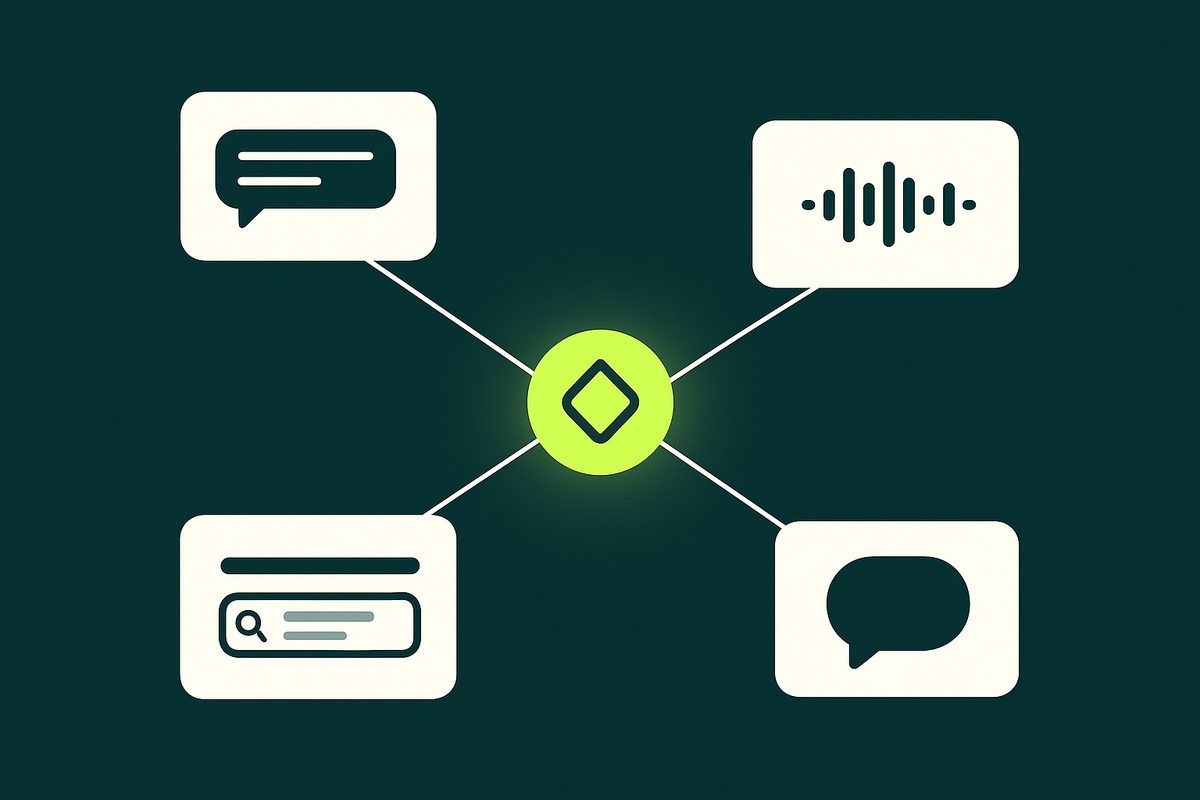
TL;DR — What is AI search optimization? AI search optimization is the practice of making your brand visible across AI-powered search — ChatGPT, Perplexity, Google AI Overviews, Gemini, and Claude — not just the classic blue links. It's a full stack, not one tactic: SEO (be findable and rankable), AEO (be the direct answer in snippets and voice), and GEO (be cited inside AI-generated answers). The brands that win in 2026 build all three layers, because each solves a different part of the same problem: being the answer, not a link buried below it.
For two decades there was one game: rank on Google's page one. That game still exists, but it's now one of several. Your next customer might find you through a ChatGPT answer, a Perplexity citation, a Google AI Overview, a voice assistant, or a Gemini summary — often without ever seeing a list of links.
The shift is measurable. Google's AI Overviews reach roughly 1.5 billion users a month, ChatGPT serves hundreds of millions of people a day, zero-click searches have climbed to around 65%, and Gartner projected that by 2026 about 25% of organic search traffic shifts to AI assistants and chatbots. When the engine writes the answer, being on page one isn't the win — being in the answer is.
That's what AI search optimization solves. This guide is the hub: what it is, the three layers it's built from, how AI engines actually choose sources, the full playbook, and how we engineer it into every site at Developios. For the deep dives, see our dedicated guides on Generative Engine Optimization (GEO) and Answer Engine Optimization (AEO).
AI search optimization is the discipline of structuring your brand, website, and content so AI-powered search engines can find it, understand it, trust it, and surface it — as a ranked result, a direct answer, or a cited source in a generated response.
It's an umbrella term, and the industry hasn't settled on one name (you'll see AIO, GEO, AEO, LLMO, GSO used loosely). The taxonomy matters less than the principle: AI search visibility is a stack of complementary layers, not a single trick. The brands that win aren't the ones who picked the right acronym and built one tactic around it — they're the ones who built the full stack.
Think of it as a stack, where each layer depends on the one below it.

You'll also hear LLMO (Large Language Model Optimization) — tuning content so models comprehend and cite it correctly. Treat it as part of the GEO layer. The point isn't the labels; it's that each layer addresses a different surface, and skipping one leaves visibility on the table.
AI engines don't just rank — most retrieve, then synthesize, then cite.
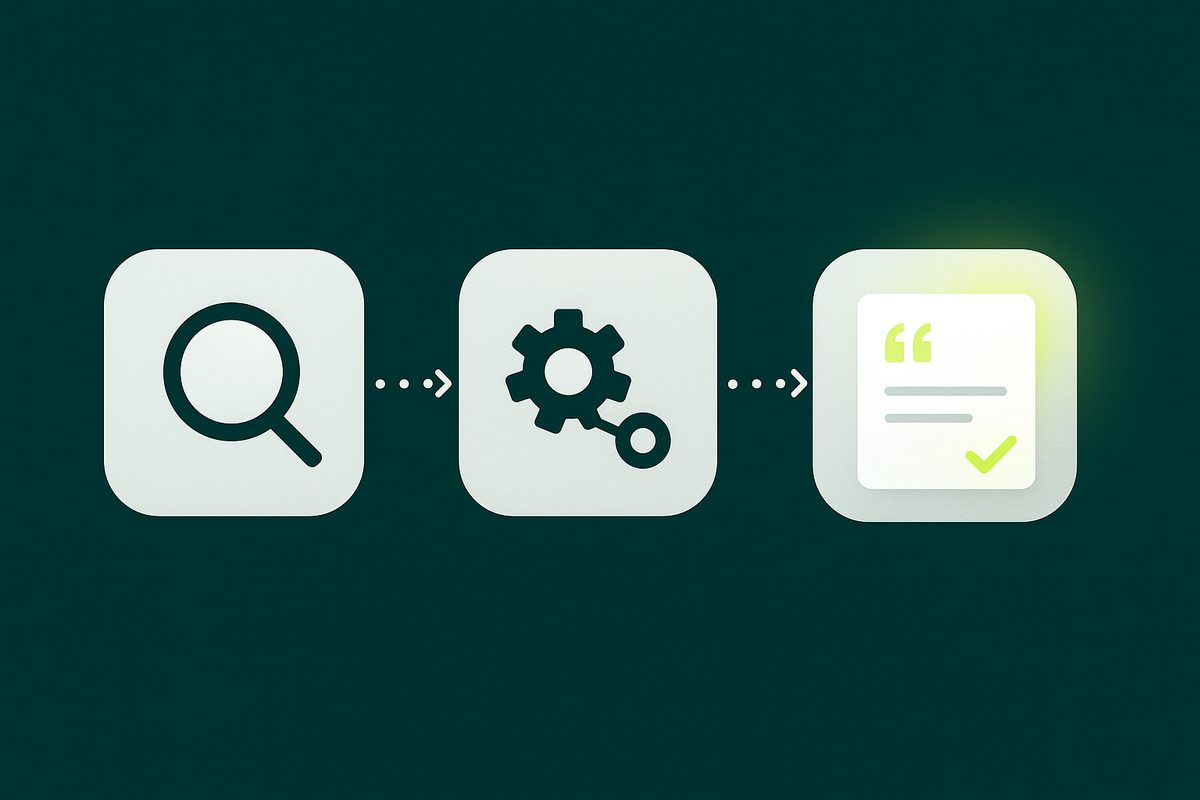
So engines consistently reward content that is findable and parseable, authoritative (recognizable entities + E-E-A-T), factual and specific (real statistics, named sources), self-contained (passages that stand alone), and fresh. Miss those, and a thinner competitor gets cited instead of you.
Here's the practical, layer-by-layer playbook. Each item compounds with the others.
If your buyers research before they buy — SaaS, eCommerce, B2B services, high-consideration purchases — AI search is already shaping their shortlist. The earlier you're structured to be the answer, the cheaper the authority is to build. Waiting just means paying more later to catch up.
Most agencies treat AI search as an add-on audit. We're an AI-Native studio, so we build the whole stack into the site from the first wireframe: crawlable semantic architecture, topical-cluster content, schema on every template, answer-first structure, fact-dense copy, and clear entity signals — engineered alongside CRO so the traffic you earn actually converts. With 150+ projects delivered and a conversion-first build process, we don't bolt AI visibility on afterward. We construct sites to be the answer and to turn that visibility into pipeline.
Want to see where your site stands? Get a free Website Audit and we'll map exactly which AI-search layers you're missing — and what to fix first. Ready to build it in properly? Book a strategy call.
AI search optimization is the practice of making your brand visible across AI-powered search — ChatGPT, Perplexity, Google AI Overviews, Gemini, and Claude — by structuring your site and content so engines can find, understand, trust, and surface it as a result, a direct answer, or a cited source. It combines SEO, AEO, and GEO.
SEO ranks a page in a list (visibility). AEO gets your content selected as the direct answer in snippets, voice, and AI Overviews (inclusion). GEO gets your brand cited inside AI-generated answers from ChatGPT, Perplexity, and Gemini (citation). They're complementary layers, not competitors.
No. SEO is the foundation — engines can't surface a page they can't crawl or rank. AI search optimization extends SEO with the answer and citation layers on top.
Lead with cited statistics and quotable, self-contained passages; structure content answer-first; be a recognizable entity with real authorship; and earn third-party mentions. See our GEO guide for the detail.
Expect early movement in 3–6 months and meaningful authority around 12 months. Citation authority compounds, so consistency beats bursts — and starting earlier is cheaper than catching up later.
Track classic rankings and Search Console, but add AI-citation monitoring: query ChatGPT, Perplexity, and Google AI Mode monthly for your target questions and record who gets cited. The goal shifts from clicks to share of the answer.
11 Burford Road, e152st
.svg)
.svg)
C-Block, Citi Housing Jhelum, 49600
.svg)
.svg)
.svg)
.webp)
